Curb notes
Choosing a standing umbrella base by weight, wheels and canopy size
Wind finds the umbrella first. Long before a napkin lifts or a menu slides, the canopy fills, the pole leans, and every guest at the table looks up.
A standing umbrella base is the part that answers. It sits on the deck or the sidewalk on its own, with no table holding the pole, and its weight is the only thing between a full canopy and the street. So choose it by three numbers you can read on the page: what it weighs, which canopy sizes it takes, and whether it rolls.

Open diagram at full size (new tab) ↗
Read the diagram in text
Three cards compare freestanding umbrella bases: a 50-pound steel base and a 75-pound concrete and steel base on casters, both for canopies up to 9 feet. A third card shows a 95-pound cast iron base that holds up to 11 feet, beside a panel on closing umbrellas in wind.
- SHADE NOTES
- Steel, 50 lb: Holds a 7 1/2 or 9-foot canopy.
- No casters
- Concrete and steel: 75 lb on casters, up to 9 feet.
- Casters
- Cast iron, 95 lb: Holds all three sizes, up to 11 feet.
- Up to 11 ft
- When the wind comes
- Close every canopy
- Bring umbrellas in at close
- Check the pole each morning
- Never go past the biggest canopy listed.
- Read the canopy sizes on the base first, then the weight. Gusts coming? Fold the shade down.
Freestanding or through the table
Two ways to hold an umbrella outdoors. The pole drops through a hole in the tabletop into a base under the table, or it stands alone in a base beside the seating.
Through the table works when every umbrella has a table under it. Both the patio tables with an umbrella hole group and our steel and aluminum patio tables cover that route, and the table helps hold the pole.
Freestanding is for everything else. Shade over a waiting line by the host stand. Shade over a bar rail where stools face the street. Shade between two two-tops pushed together for a bigger party. The base stands on its own, so the table layout can change without the umbrella moving. That freedom is the point, and it is also why the base has to carry the load alone.
Four bases and the canopies they take
Every base in our umbrella range names the canopy sizes it accepts. Read that line before the weight.
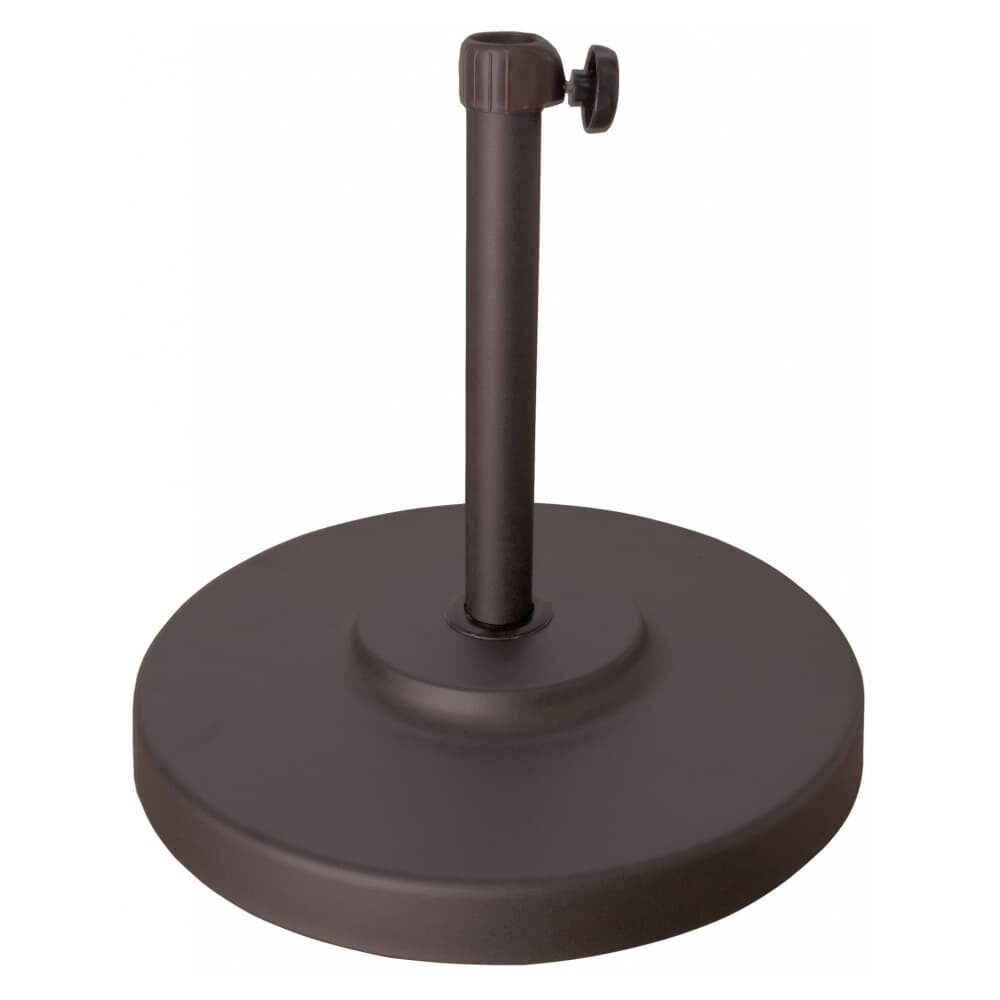
- A steel umbrella base at 50 pounds and 18 inches tall holds a canopy of 7 1/2 or 9 feet, in black, bronze, stone grey or white.
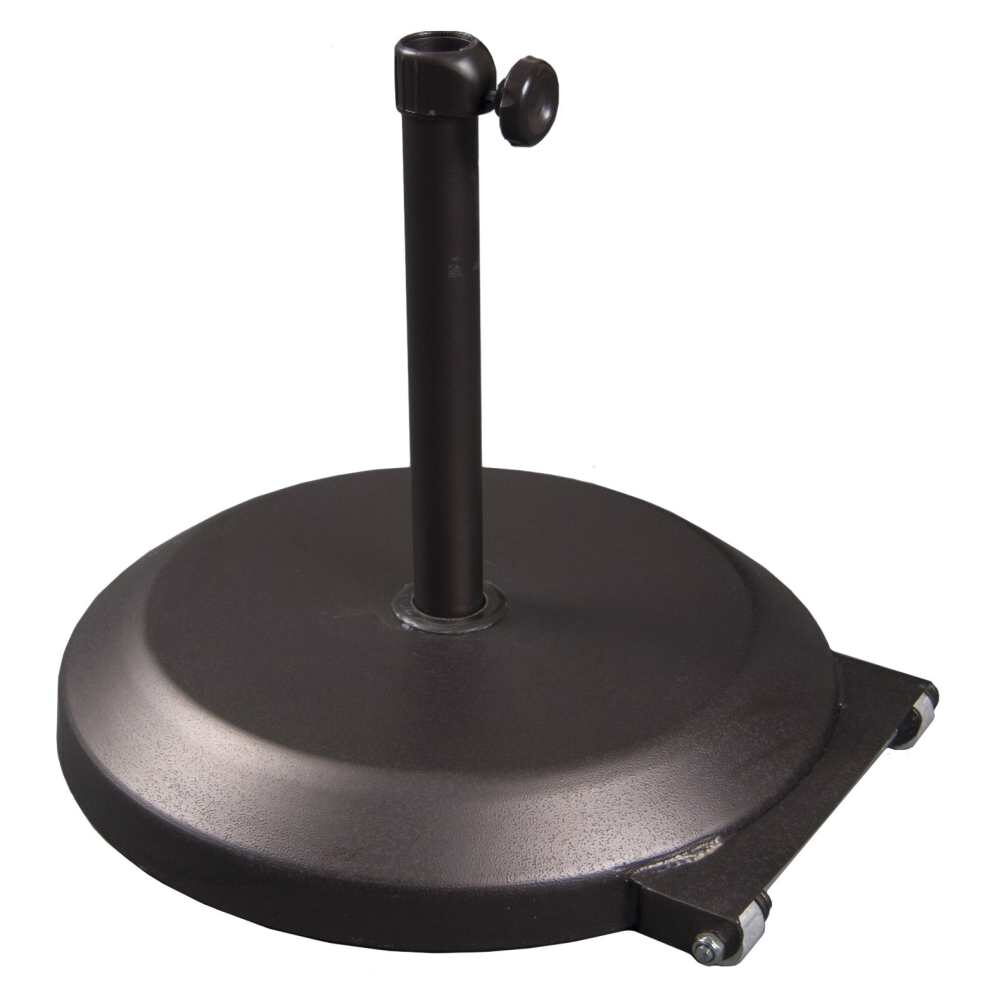
- A concrete and steel base with casters at 75 pounds and 18 1/2 inches tall takes the same two sizes, with a black, bronze or white pole finish.
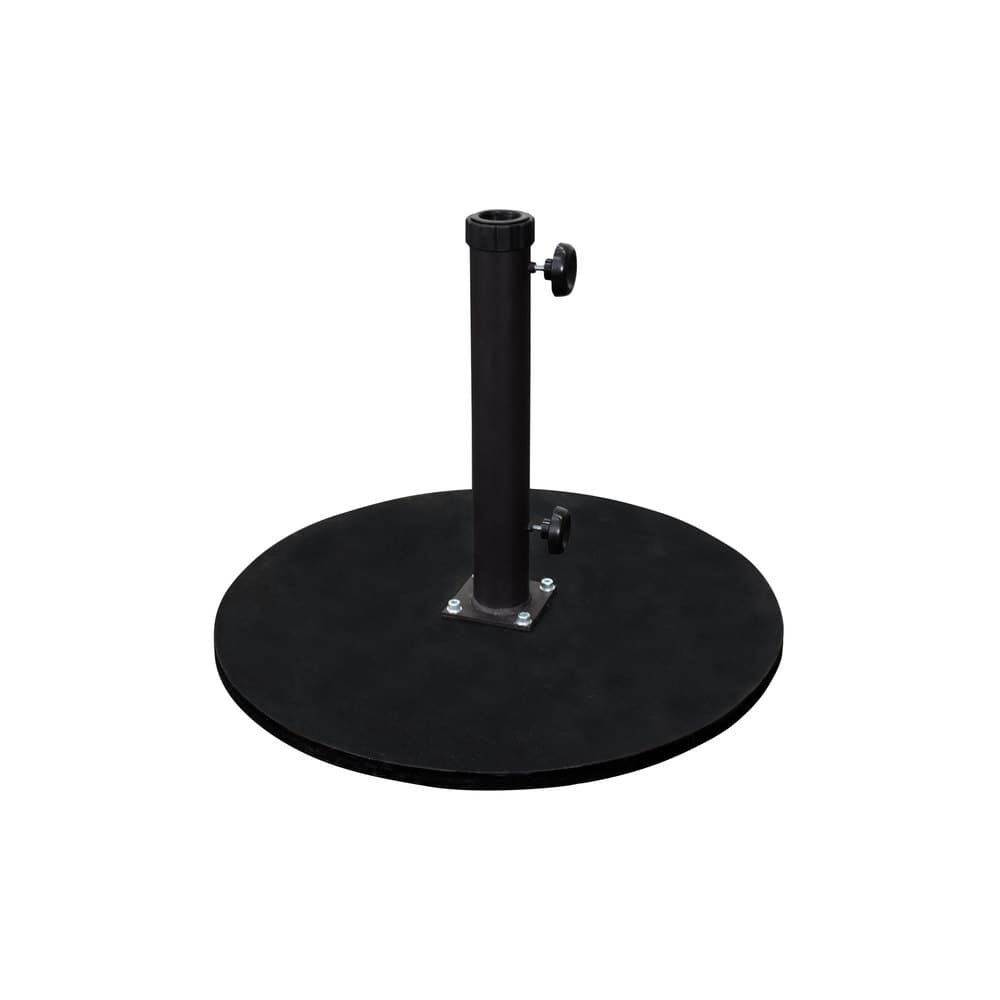
- A cast iron umbrella base at 95 pounds and 17 3/4 inches tall holds any of our three canopy sizes, from 7 1/2 feet up to 11.
- A stainless steel base with casters comes in a 20 by 20 or a 24 by 24-inch footprint, stands 24 7/8 inches tall, and also takes all three sizes, up to 11 feet.
Our umbrellas list the same 1 1/2-inch pole on every model, so the pole fits. The canopy size decides the pairing.
Rule of thumb: buy the base for the biggest canopy it lists, never a canopy bigger than that. An 11-foot umbrella belongs in the cast iron base or the stainless base on casters. The steel and concrete bases stop at 9 feet.
That mismatch is the mistake to avoid. An 11-foot canopy looks like a small step up from a 9-foot one. Across the whole canopy it is two more feet of fabric to catch the wind, on a pole the lighter bases were never listed to carry.
The arithmetic of weight
Put the numbers side by side.
Our 9-foot aluminum umbrella weighs 20 pounds. In the steel base, the pair weighs 70 pounds, and the base is two and a half times the umbrella. In the cast iron base, the pair weighs 115 pounds, and the base outweighs the umbrella almost five times over.
Now the 11-foot umbrella at 24 pounds. In the cast iron base, 95 plus 24 is 119 pounds standing on the deck.
Heavier holds better in a gust; that part is plain physics. The cost shows up at close. Four cast iron bases are 380 pounds of iron to move or leave in place every night, before the umbrellas come off.
So pick the weight by where the base lives. A base that stays put all season, on a terrace or a courtyard corner, can be the heaviest one that fits the canopy. A base that moves every day needs another answer.
Casters for the daily move
Two of the four bases roll. The concrete and steel base carries 75 pounds on casters, and the stainless steel base also comes with casters.
On a sidewalk that opens and closes every day, casters change the job. A crew of one can tip and roll a 75-pound base to the storeroom instead of lifting it. Sweeping under the seating takes minutes when the shade moves with a push.
The same wheels that help at close can creep on a sloped walk or a roof deck pitched for drainage. Park caster bases on the flattest spot you have, keep them out of the walkway, and check them again after the umbrella goes up. If the slope is steep, choose the cast iron base and leave it where it stands.
Freight is worth a thought too. Iron and concrete bases travel on a freight pallet and are handed off at the dock or the tailgate, nowhere further. No dock at the restaurant? Ask for liftgate service on the order itself, since it has to be booked up front; the delivery page lists the extra services.
Close it when the wind comes
No base turns an open canopy into a windproof one. Treat closing as part of service, not an emergency.
Close every canopy when the wind picks up, even mid-service, even if the sun is still out. Close them all at the end of the night, and bring the umbrellas indoors when the rail is empty. Check the base and the pole fit each morning before the canopy opens. A loose pole in a heavy base still rattles, and that rattle is a sign to stop and reseat the pole before service.
For the canopy side of this choice, pole materials and canopy sizes, see our guide to commercial patio umbrellas. For tables and chairs that hold their ground on the same deck, the guide to commercial patio furniture for busy decks picks it up.
Mark the spot, then match the base
Walk the space with chalk. Mark every point where a freestanding umbrella will stand, then write the canopy size beside each mark. Next to the mark, write one more thing: stays all season, or moves every night.
Those two words pick the base. All season and 11 feet, the cast iron one. Every night and 9 feet, the concrete and steel base on casters. Save each pairing in an outdoor plan, umbrella and base on the same line, and put the closing rule in the notes where the evening manager will read it.