Curb notes
What heavy duty commercial patio furniture means on the spec list
Two chairs sit side by side on a product list. One has a steel frame and weighs 18 lbs. The other is aluminum and weighs 10. Both list a weight capacity of 500 lb. Buy the heavier one because it felt tougher in your hand and you get a harder nightly carry, with nothing extra on the capacity line.
That is the trouble with the phrase heavy duty. It sounds like a spec, and it isn't one. Heavy duty commercial patio furniture only means something when you can point at the record and read the numbers behind the words: what the piece holds, what it weighs, what it is made of, and where it is listed for use.

Open diagram at full size (new tab) ↗
Read the diagram in text
Three cards rank the lines to read on an outdoor product page: weight capacity, frame weight and the usage line. A side panel lists the four fields to copy and notes the 6-month warranty on patio pieces.
- SPEC LIST NOTES
- Weight capacity: Who can sit: 300, 400 or 500 lb as listed.
- THE GUEST
- Frame weight: What the wind and the closing crew feel.
- THE SITE
- Usage line: Patio listed, and any covered-patio flag.
- THE SPOT
- COPY FROM EACH PAGE
- Weight capacity
- Frame material
- Chair weight
- Usage and covered flag
- Patio chairs, tables and stools: 6 months of limited warranty.
- Capacity tells you who can sit, frame weight what the wind and the crew feel, usage where it goes.
Four lines that do the talking
Most outdoor chair and stool pages we carry have a spec list. Four lines in it tell you more than any product name.
Weight capacity comes first. Our outdoor chairs list 300, 400 or 500 lb. When someone asks whether a chair will hold a big guest, that figure is the answer, and the only one.
Frame material is next: aluminum, steel, metal or resin. It tells you how the frame behaves outside. Aluminum stays light, steel adds mass, resin hoses down. On its own it says nothing about capacity, as the two chairs above prove.
Then the chair's own weight in pounds. That number belongs to the closing crew and to the wind.
Last, the usage line, plus a flag a few records carry: covered patio only. Patio usage means the piece is meant for outside. The covered flag means it wants a roof over it, and the covered seating guide explains what that changes on an open sidewalk.
Capacity is not the same as heft
Line up three of our patio chairs.
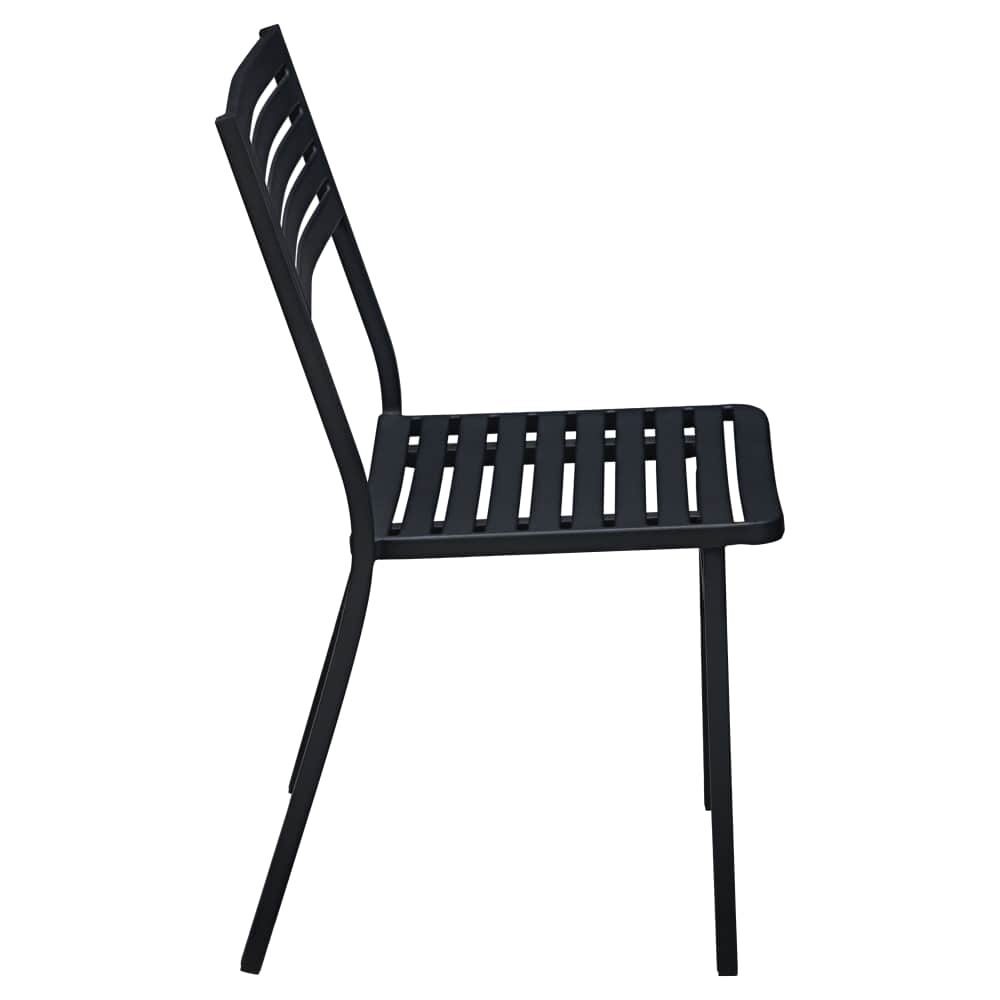
- A steel outdoor side chair lists 18 lbs and a 500 lb capacity, stacks, and is listed for patio use.
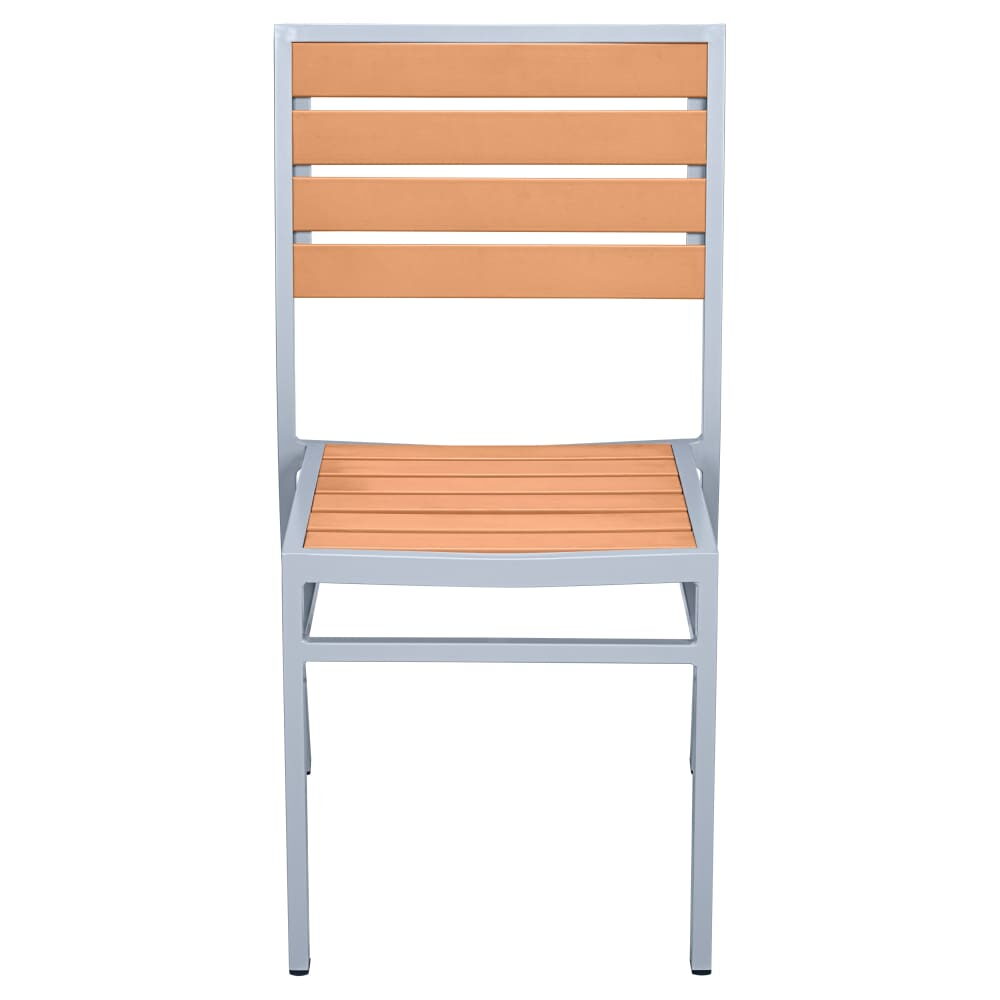
- A gray aluminum patio chair with faux teak slats lists 10 lbs and 500 lb, and stacks.
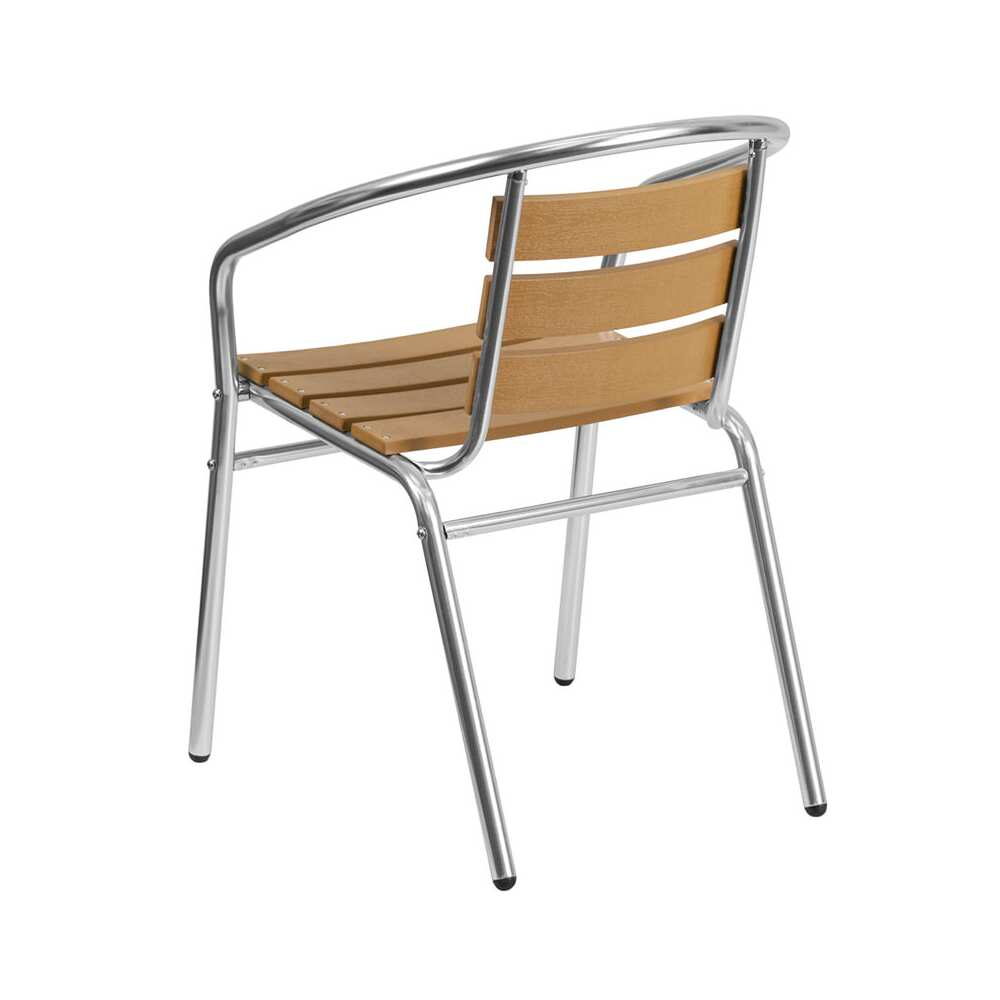
- An aluminum and faux teak patio armchair lists 5 lbs and 400 lb.
The steel chair weighs nearly twice what the aluminum one does and carries the same rated load. The lightest of the three holds 100 lb less. None of that shows in a name. All of it shows in the spec list.
So which one is the tough one? Each, for a different job. The steel chair holds its ground when a gust cuts across an open corner. The aluminum chair goes inside faster at midnight. The 5 lb armchair belongs in a sheltered courtyard with a small setup crew more than on a windy rooftop.
Forty chairs, every night
Run it for a sidewalk that seats 40 and brings every chair in after close.
- Steel at 18 lbs: 40 x 18 = 720 lbs carried in, and the same back out in the morning.
- Aluminum at 10 lbs: 40 x 10 = 400 lbs each way.
That is 320 lbs less per trip and 640 lbs less per day, setup and breakdown together. Over a six-day week the gap reaches 3,840 lbs. The capacity stays at 500 lb in both columns. What moves is the length of the closing shift and how the chairs act when the wind swings round the building.
Rule of thumb: buy capacity for the guest and frame weight for the site. Exposed and gusty, lean heavier. Sheltered and broken down nightly, lean lighter. Neither choice is written into a product name.
The mistake: an indoor chair that looks the part
The costliest version of this starts in the dining room. A buyer sits in a solid wood chair or a padded metal chair, decides it's sturdy, and sets a row of them out on the sidewalk.
Sturdy inside counts for nothing outside. Wood frames swell, padded seats soak and fade, bare metal rusts, and the warranty excludes indoor furniture used outdoors. We sell only outdoor furniture, and the usage line on each page in our patio chairs says where a piece belongs. Read it before you count any chair as street seating.
What our terms promise for outdoor pieces
Six months. That is the warranty on a patio chair, table or stool. It is limited: it applies to the first buyer using the piece in ordinary commercial service, and to flaws in material or build that were already there when the freight arrived. Outdoor furniture nobody looked after falls outside it. So do misuse, harsh or wrong cleaners, everyday wear, and anything broken in transit, which becomes a claim against the carrier.
Care is the part you control. Rinse frames and slats, let seats drain, and cover or store the set at season's end. Spot a defect? Email us within three days of receipt. Send the order reference, a line on what is wrong, and three kinds of photo: the full chair or table, a close shot of the flaw, and its labels. We then decide whether to fix it, swap it, or refund its price as a credit.
Certification follows the same logic as capacity. Where a product page lists one, BIFMA for example, it appears on that page. Where the page shows none, don't plan around one.
Tables and sets, same test
Tables carry their own fields: height, top material, base material, and on some records weight and an umbrella hole. This 36-inch square faux teak patio table on an aluminum frame lists 24 lbs, a 36 by 36 top, and an umbrella hole. Where a corner catches wind, a cast iron or steel base adds mass under the top, and our metal outdoor furniture shows the base material on each page.
Sets put chairs and a table on one line. Read the chair capacity and frame on the set page exactly as you would for a single chair. Our outdoor furniture sets list both.
Copy four lines, then save the plan
Before you order, list the pieces you are weighing and copy four lines from each page: capacity, frame material, weight, usage. Add a fifth column for where each one goes. The windy corner. The wall under the awning. The rooftop rail.
Then save the winners to an outdoor plan, one plan per space, with that column in the notes. If the light end of the list wins, the aluminum furniture guide covers bases, breakdown and gusts in more depth.