Curb notes
Under the top: picking an outdoor table base by spread and height
Wind comes round the corner of the building and hits the tabletop first. What happens next depends on the iron, steel and spread underneath it.
An outdoor table base is the least looked-at piece on a patio and the one that does the most work. The top gets the photos. The base decides whether that top sits level on a sloped sidewalk, whether it rocks when a guest leans on it, and whether it can hold an umbrella pole as well. We sell only outdoor and accessory pieces, so every base here is one we list for patio use. This guide is about choosing by height, footprint and the umbrella question.

Open diagram at full size (new tab) ↗
Read the diagram in text
Three cards pair round tops with bases by the two-thirds rule: a 30-inch top on a 22-inch base, a 36-inch top on a 30-inch base, and a 42-inch top on a 28 or 30-inch base, beside a panel on height as base plus top.
- BASE NOTES
- 30-inch round top: Needs a 20-inch spread: the 22 fits.
- 22 in base
- 36-inch round top: Needs 24 inches: skip to the 30.
- 30 in base
- 42-inch round top: Needs 28 inches: the 28 or the 30.
- 28 or 30 in
- Height is base plus top
- 28 in base plus 1 1/8 in top
- About 29 1/8 in to dine
- 41 in base for a bar top
- Read the top's thickness first.
- Top width times two, divided by three: that is the smallest foot. Then add the top's thickness.
What we list for outdoor tops
Our outdoor bases sit in the outdoor range beside the tables and tops. Four kinds cover most patios.
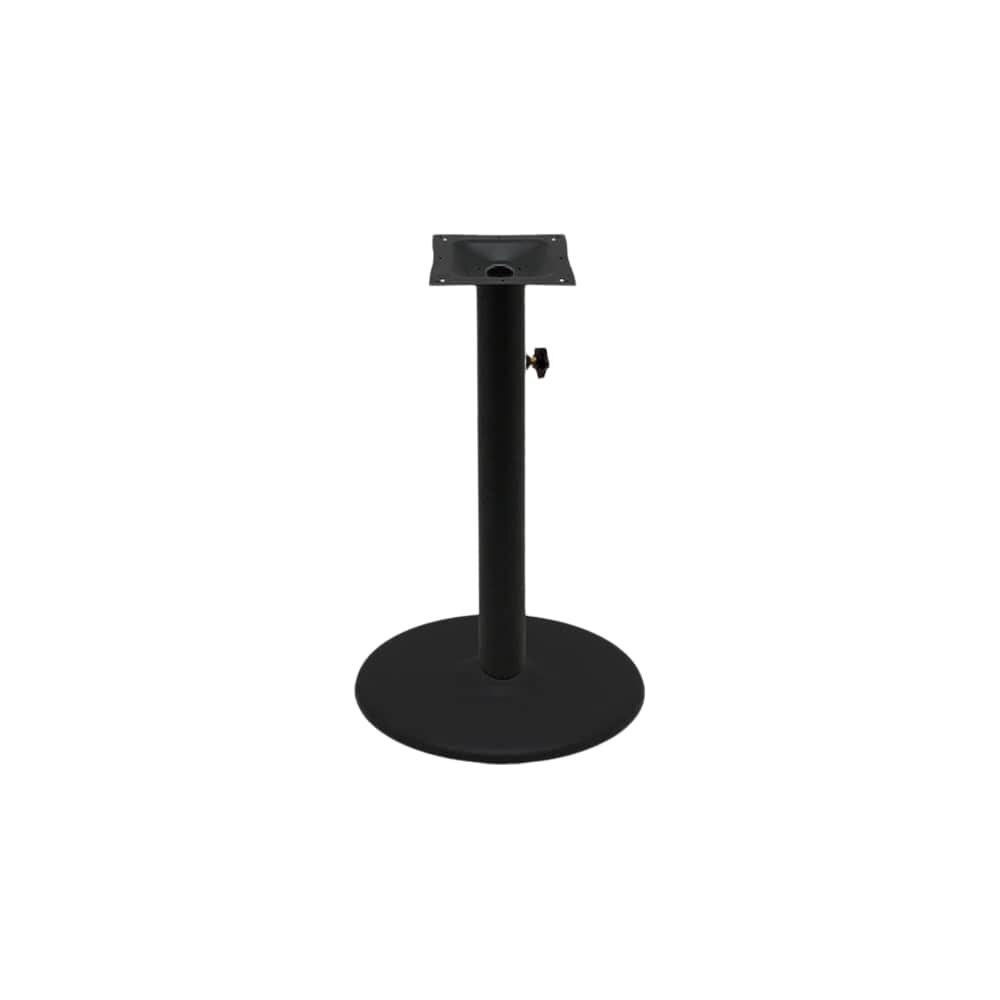
- A round outdoor table and umbrella base in black steel, 28 inches tall at standard height or 41 at bar height, with a round foot of 17, 22 or 30 inches.
- A stainless steel round outdoor base, 28 3/4 inches standard or 40 1/2 bar, at 17, 22 or 28 inches across.
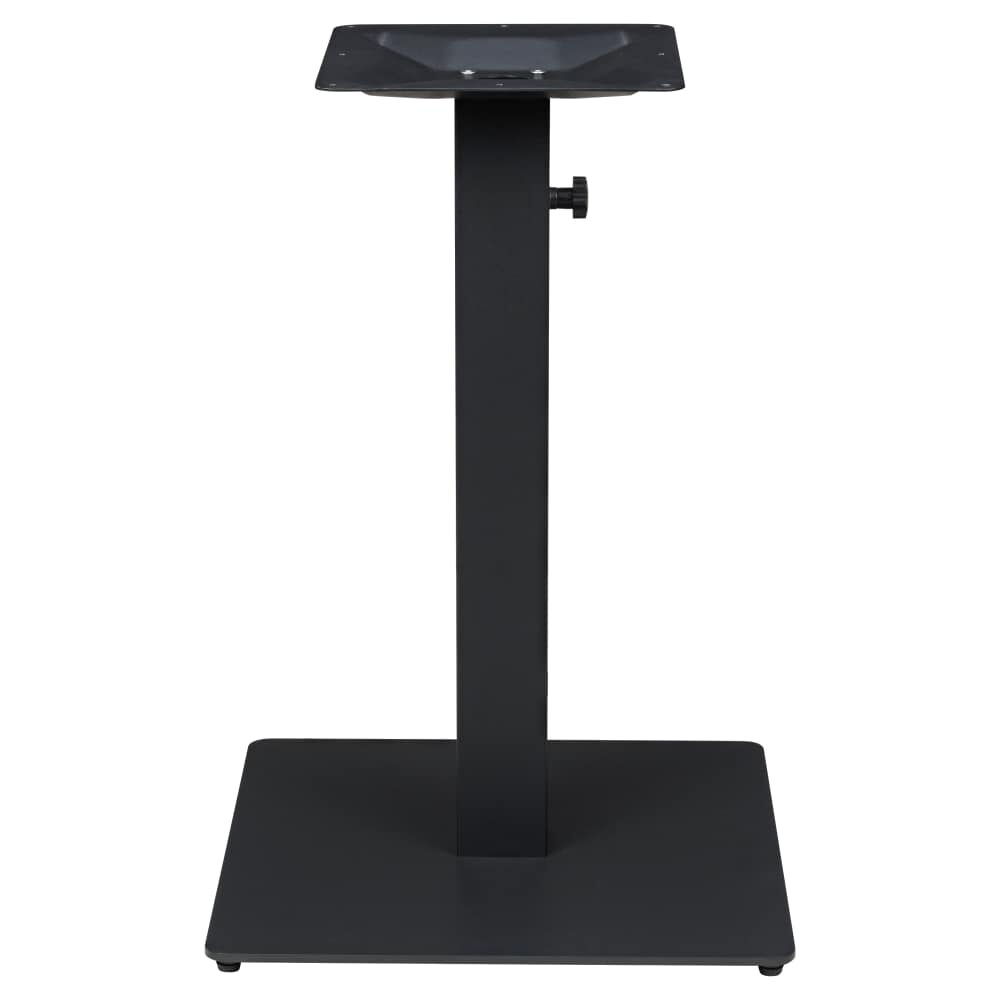
- A black cast iron outdoor base at 28 inches, in a 20 by 20, 20 by 30 or 18 by 38-inch footprint, with an umbrella pole holder as an option.
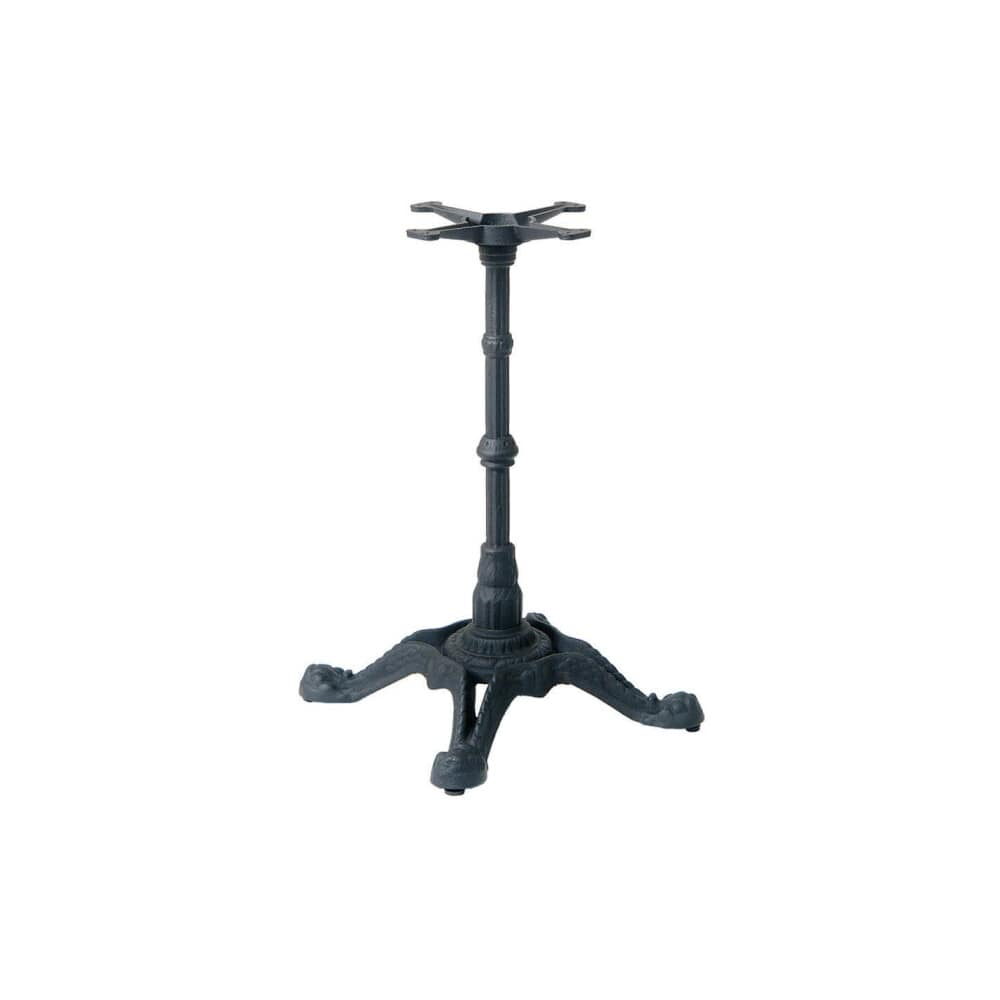
- A four-prong cast iron outdoor base at 29 inches with a 24 by 24-inch spread, weighing 34 pounds.
Each of the four lists its weight: the round steel base runs 27 to 46 pounds by foot size, the stainless round base 30 to 69, the black cast iron base 48 to 84, and the four-prong base 34. Copy the one for your size to the plan, not a guess.
The two-thirds rule
Here is the rule to carry onto every patio. Take the width of a round top, double it, divide by three, and choose a foot no narrower than the answer.
Run it on real tops. A 30-inch round wants a 20-inch spread, so the 22-inch base clears it. A 36-inch round wants 24, so skip the 22 and choose the 30-inch steel base. A 42-inch round wants 28: the stainless base at 28 inches or the steel one at 30.
Now the honest one. A 48-inch round wants a 32-inch spread, and our largest round base is 30. That top outruns the round bases in our range. For a big party outside, choose a 42-inch round or a rectangle on the 18 by 38-inch footprint, which follows a long top along its length.
The same proportion makes a quick check on squares. The four-prong base spreads 24 inches, two thirds of a 36-inch square top, which makes it a natural fit for a four-top at 36 by 36.
Steel, stainless or cast iron
Finish is the next choice, and the street sees it. The round steel base comes in black. The stainless round base is silver, with a gold version in the same sizes for a warmer look. The cast iron base comes in black, with a titanium gray version listed in steel.
Pick by what is around the table. Black disappears against dark pavers and reads clean under a dark top. Silver catches the sun on a rooftop. Gold suits a terrace with brass rails or warm stone. Keep one finish down a whole sidewalk run, because a mixed row of feet shows from every curb seat.
Height is base plus top
Standard bases run 28 to 29 inches. Add the top and you land at dining height.
Take a reclaimed-look outdoor resin top, listed at 1 1/8 inches thick. On a 28-inch base it finishes at about 29 1/8 inches, a comfortable height to eat at. On the 29-inch four-prong base it comes out near 30 1/8, a hair high. On a 41-inch bar base it lands near 42 1/8, right for a bar stool.
Read the thickness on each top before you pair it. Our resin tops with a phenolic edge are listed at 1/2 inch, so the same base gives a lower table. A teak top at 1 inch lands between the two. More tops live under resin table tops.
When the base holds the umbrella too
Two of our bases answer the umbrella question. The round steel base is listed as a table and umbrella base. The cast iron base takes an umbrella pole holder as an option, chosen when you configure it.
That pairing needs a top with a hole. Our resin tops with a phenolic edge list the umbrella hole as an option, and the patio tables with an umbrella hole come drilled already. Our patio umbrellas all share a 1 1/2-inch pole.
Close the umbrella when the wind picks up. A base that holds a pole is still a table base, and a full canopy over a two-top asks a lot of it. For bigger canopies, look at a freestanding umbrella base beside the table instead, and our guide to the outdoor bar table shows how that works along a high-top rail.
The mistake at the curb
Matching the base to the top's shape and forgetting its size. A buyer orders 42-inch rounds, sees a round base in the right finish, and picks the 22-inch foot because it was first on the list. Two thirds of 42 is 28. The 22-inch base falls six inches short, and on a sloped sidewalk the table rocks every time someone leans in to talk.
Run the two-thirds check on every line before it goes in. It takes a minute and a calculator, and it saves a season of folded napkins under the feet.
Sketch the tops, then the feet
Draw each table on the plan at its real size, then draw the base footprint under it. Where the foot sits close to a curb, a tree grate or a drain, move the table before you move the base. Mark which tables take umbrellas so the right tops get the hole.
Put each base and each top on its own line in an outdoor plan, heights written in the notes. If the courtyard calls for wood, our guide to the teak outdoor dining table covers a teak top that pairs with these bases, and the guide to outdoor bistro sets covers the small round tables most sidewalks start with.