Curb notes
Outdoor bistro sets and the two-top math of a city sidewalk
Two chairs, one small table, a strip of sidewalk. That is the whole unit, and on most city fronts it is the unit that pays. A two-top fits where a four never will, between the door and the planter, under the window, in the gap by the bike rack.
Outdoor bistro sets give you that unit in one order: a small table and its chairs, matched in finish and height, all listed for patio use. Before you pick one, though, get three things straight. How big the top is. Whether the pieces join and split. And what happens to them at midnight.

Open diagram at full size (new tab) ↗
Read the diagram in text
Three cards rank tops for two guests: 24 by 24 as the minimum, 24 by 30 as the standard and 30 by 30 as the generous size. A side panel notes that squares join in pairs and rounds stand alone.
- TWO-TOP NOTES
- 24 by 24: The minimum for two. Coffee, not lunch.
- MINIMUM
- 24 by 30: Standard for two, room for a knife and fork.
- STANDARD
- 30 by 30: Generous. Plates and a shared side fit.
- ROOMY
- ON THE SIDEWALK
- Buy in even numbers
- Two 24 x 30 make a four
- Rounds do not join flush
- Six sets become three fours on a busy night.
- 24 by 24 is the floor, 24 by 30 the standard, 30 by 30 the roomy one. Squares join into fours.
Size the top for the plate, not the photo
Small tops look generous in a picture with one espresso on them. Brunch is different. Two guests at a 24 by 24 top can fit, but the plates touch, the water glasses sit on the edge, and the server has nowhere to set the check.
Here is the reference range for two. A 24 by 24 top is the minimum. A 24 by 30 is the standard. A 30 by 30 is generous and leaves room for plates and a shared side. Pick the size for what you actually serve, then confirm it on the set's option list.
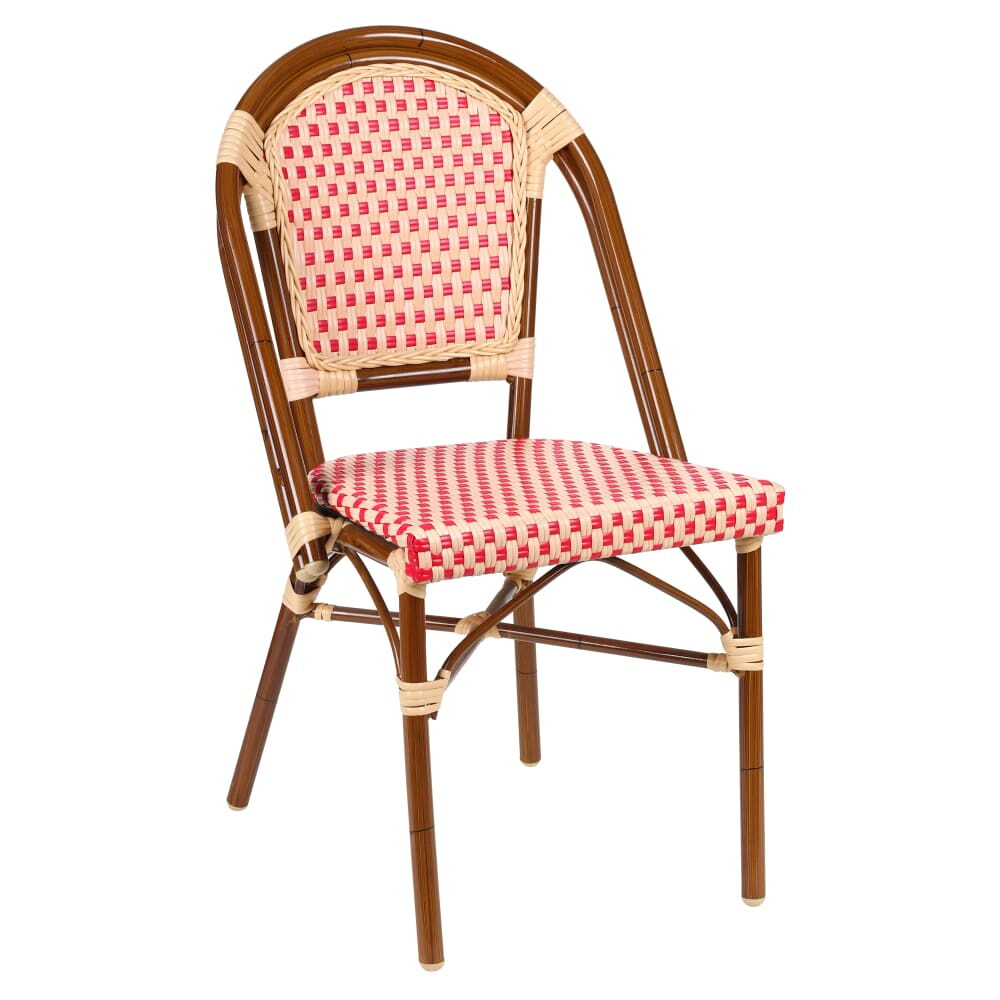
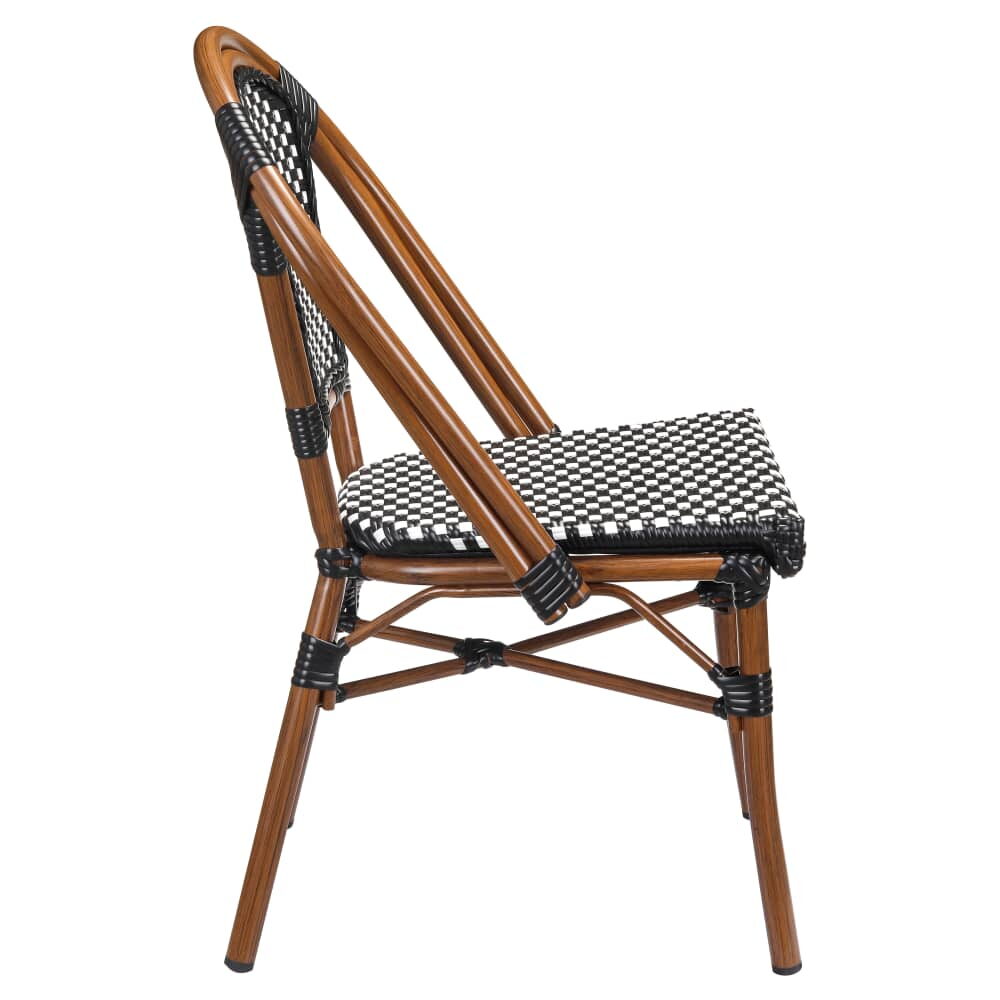
This Paris-style patio set with two chairs lists five table sizes: 24 by 24, a 24-inch round, 24 by 30, 30 by 30 and a 30-inch round. Its aluminum frames carry a bamboo look over faux rattan seats, and the set is listed for indoor and patio use. You choose the chair colorway on the same page.
Here is a mistake that is easy to make: a coffee bar orders 24-inch tops for a sidewalk that turns into a lunch service by noon. Plates crowd, and the fix is a second order. If your menu has a knife and fork on it, start at 24 by 30.
Squares join, rounds stand alone
Two-tops earn their keep by changing shape during the day. At nine, they sit single along the wall. At seven, a party of four walks up and you push two together.
That trick works with squares and rectangles. Two 24 by 30 tops pushed together on their 30-inch sides make a 48 by 30 surface, which is the size of a standard rectangle for four. Rounds do not join flush. They are lovely at a corner or a single spot by the door, but a row of rounds stays a row of twos.
Rule of thumb: buy two-tops in even numbers, all one size and one height, so every pair can become a four. A run of six becomes three fours on a busy night and goes back to six twos in the morning.
A worked night on a 30-foot front
Say you run six bistro sets on a 30-foot sidewalk front. Six tables, twelve chairs, twelve seats.
Saturday at seven, three parties of four show up. Join the six tables in pairs and you have three fours, still twelve seats, no new furniture. Sunday morning you split them back.
Now the price side. The Paris-style set starts at $376 per set, so six sets start at $2,256 before freight. Freight is not in that figure. A person here reads every order first, then emails a freight quote for your street along with the final total.
Then the weight side. This aluminum bamboo-look bistro chair lists 7 lbs and stacks. Twelve of them is 84 lbs carried in every night, a few stacks instead of twelve trips. Chairs that do not stack would be twelve separate walks at closing.
Sets versus picking pieces
A set saves you the matching. Height, finish and chair count arrive as one line. The outdoor furniture sets group gathers the sets we list and the matching tables and chairs sold on their own.
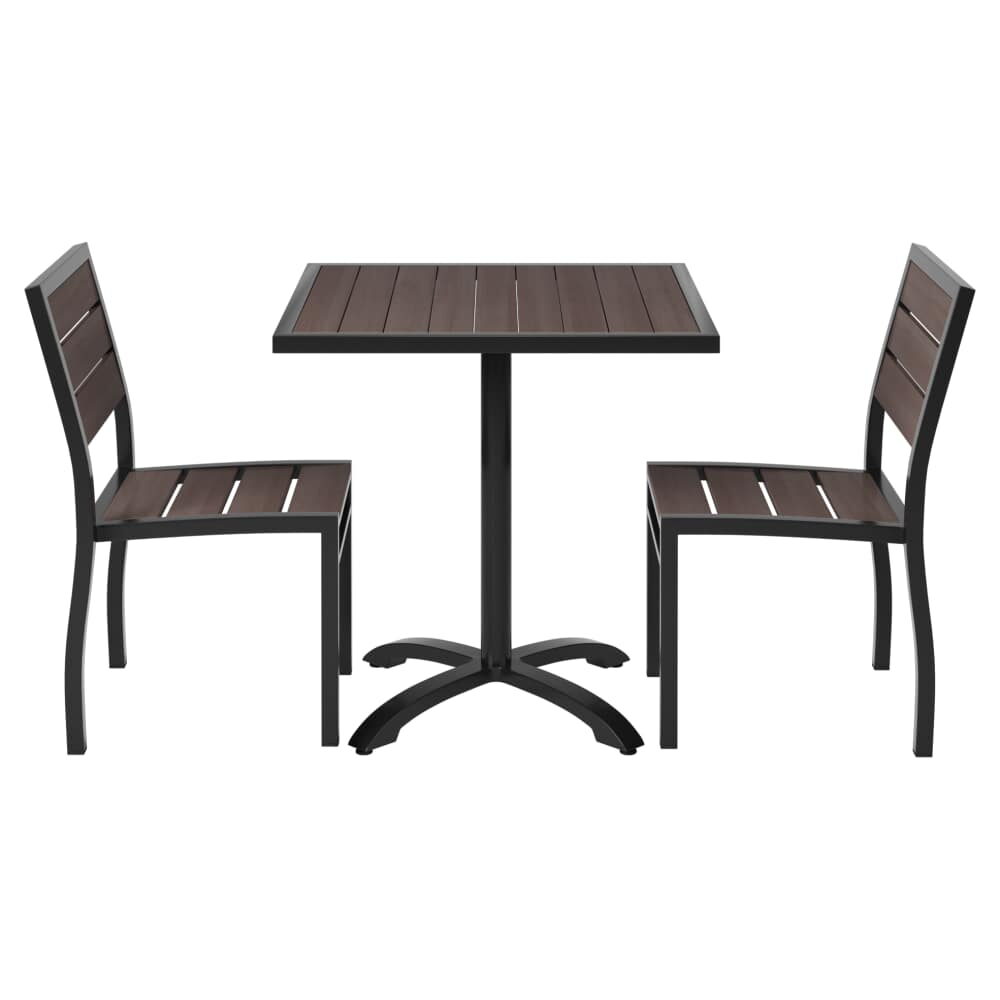
Some sets let you scale up. This black aluminum dining set with dark walnut faux teak offers tops from 24 by 24 to 30 by 48 with a base, and two or four matching chairs, all stackable. Order the 24 by 30 with two chairs for the sidewalk, the 30 by 48 with four for the courtyard corner, same look on both.
Pieces bought separately give you more room to choose. Browse the French bistro chairs for the chair, then pick a top from the patio tables at the same dining height. Check that the chair's width plus pull-out room still fits your strip before you order twelve.
If your rail or ledge is taller, a bistro set is the wrong height entirely. Read the outdoor bar table guide or the guide to the bar height patio set before mixing heights on one sidewalk.
Stack, chain, cover
Breakdown is part of the purchase. Plan where the stacks go at night before the sets arrive. A storage room by the kitchen door, a cage at the back, a covered corner of the courtyard.
If there is nowhere inside, chain the stacks to each other or to a fixed point and cover them. Keep them out of the walkway. Rinse the frames and seats when the dust builds up, let them dry, and store or cover everything at season end. Patio pieces still need that care, and the warranty leaves out outdoor furniture that did not get it.
Umbrellas need a plan of their own. The Paris-style set does not list an umbrella hole, so its shade comes from a freestanding base and a pole beside the table. The patio umbrellas group lists the umbrellas and bases side by side. Close it when the wind picks up and bring it in at night.
Sixty seconds with a tape and a chalk line
Lay out one set on the actual concrete before you order six. Set the table where it will live, put both chairs in, and sit down. Push back. Can a server get past behind you with a tray? Does the walkway tape stay clear when you stand up?
Write the answer into an outdoor plan: the top size, the chair, the count, and a note that tables join in pairs. If one corner of the front can take a four, the guide to round tops from 36 to 48 inches sizes it against the walkway. When it is right, move it to the basket, and book a liftgate on the order if your street has no dock.