Curb notes
Outdoor counter stools start with a tape measure at the ledge
The ledge is 36 inches. The stool seat is 30. That leaves six inches for a pair of knees, and nobody sits there twice.
Outdoor counter stools trip up more sidewalk and rooftop orders than any other seat, because "counter" gets used for every ledge along a rail, a planter or a street-facing window. Height decides the whole order. Measure the ledge first, from the finished deck or pavement to the top surface, write the number down, and only then shop for the stool.

Open diagram at full size (new tab) ↗
Read the diagram in text
Side views of two outdoor ledges. On the left the counter top stands 36 inches high and the seat 24 to 26; on the right the rail stands 42 inches and the seat 29 to 31, with 10 to 12 inches of gap marked under each top.
- LEDGE NOTES
- 36 in.
- 24 to 26 in.
- 10 to 12: inches
- Counter ledge
- 42 in.
- 29 to 31 in.
- 10 to 12: inches
- Bar rail
- A 36-inch counter wants a 24 to 26-inch seat. A 42-inch rail takes the 29 to 31-inch stools.
Two heights, two different stools
A counter stands about 34 to 36 inches off the ground. Pair it with a stool whose seat rides roughly 24 to 26 inches up. Bar height sits higher, about 40 to 42 inches, and its stools put the seat at around 29 to 31 inches.
Same rule at both heights: keep 10 to 12 inches of air from seat to top. Less and knees jam. More and the guest sits low, chin near the plate, like a kid at the grown-ups' table.
Run it on a 36-inch ledge. Take away 12 and you get 24. Take away 10 and you get 26. So the seat you want lands between 24 and 26 inches, and a bar stool at 30 inches is four inches too tall even at the generous end. Guests feel that in the first minute. Thighs press the underside, elbows ride up, and the two-top beside them fills up first because nobody wants the ledge.
Now flip it. A 42-inch rail minus a 30-inch seat is 12 inches, right on the mark. That one subtraction tells you which stool belongs where, before a single product page is open.
What our outdoor range carries at each height
Here is the straight answer. Open our outdoor bar stools and read the seat heights each page lists. You will find 28 1/4 inches, 29 inches, 29 1/2, 29 3/4 and a flat 30. Those are bar numbers. None of our outdoor stools comes with a listed seat between 24 and 26 inches.
That changes the plan for an outdoor counter. You have two honest routes.
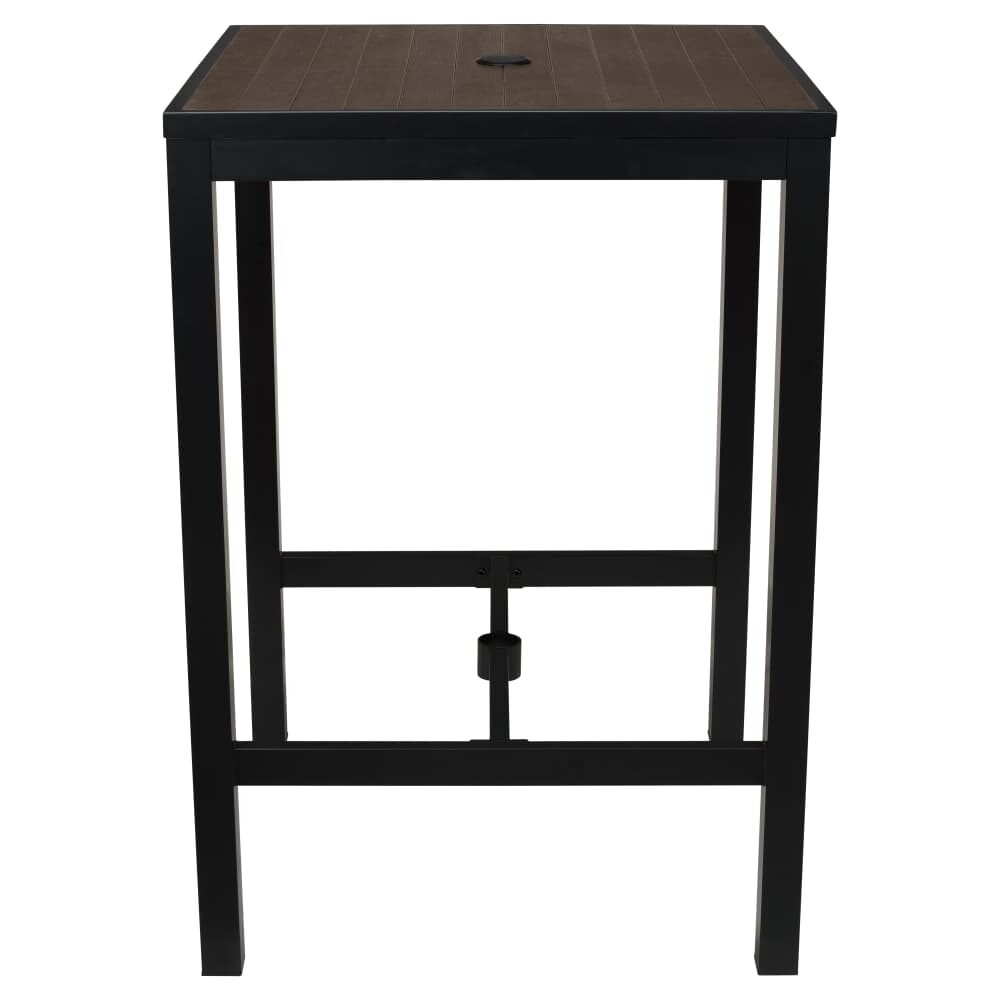
Raise the ledge. If the rail is still a drawing, say a new rooftop bar rail or a built-in along a sidewalk planter box, draw it at 41 or 42 inches and our whole outdoor stool range fits it. Our black aluminum outdoor bar table lists a bar height of 42 inches with an umbrella hole, so a freestanding high-top can match the rail line and share the same stools.
Keep the 36-inch ledge as a standing ledge. Guests lean, set down a drink, watch the street, and move on. No stool, no knee problem. If the counter is poured concrete at 36 inches and must take seats, send the measurement to a specialist before you order anything, and get the answer in writing.
The mistake to avoid: ordering bar stools for a counter and hoping. The word "stool" lands in the cart, and nobody took a tape measure to the site.
Spacing along the rail
Bar stools want 24 to 30 inches center to center. The low end packs the rail for the evening crowd. The high end gives elbows room and keeps a server's arm clear when a tray comes over the guests' shoulders.
Width decides which end you can use. Take three stools from our range:
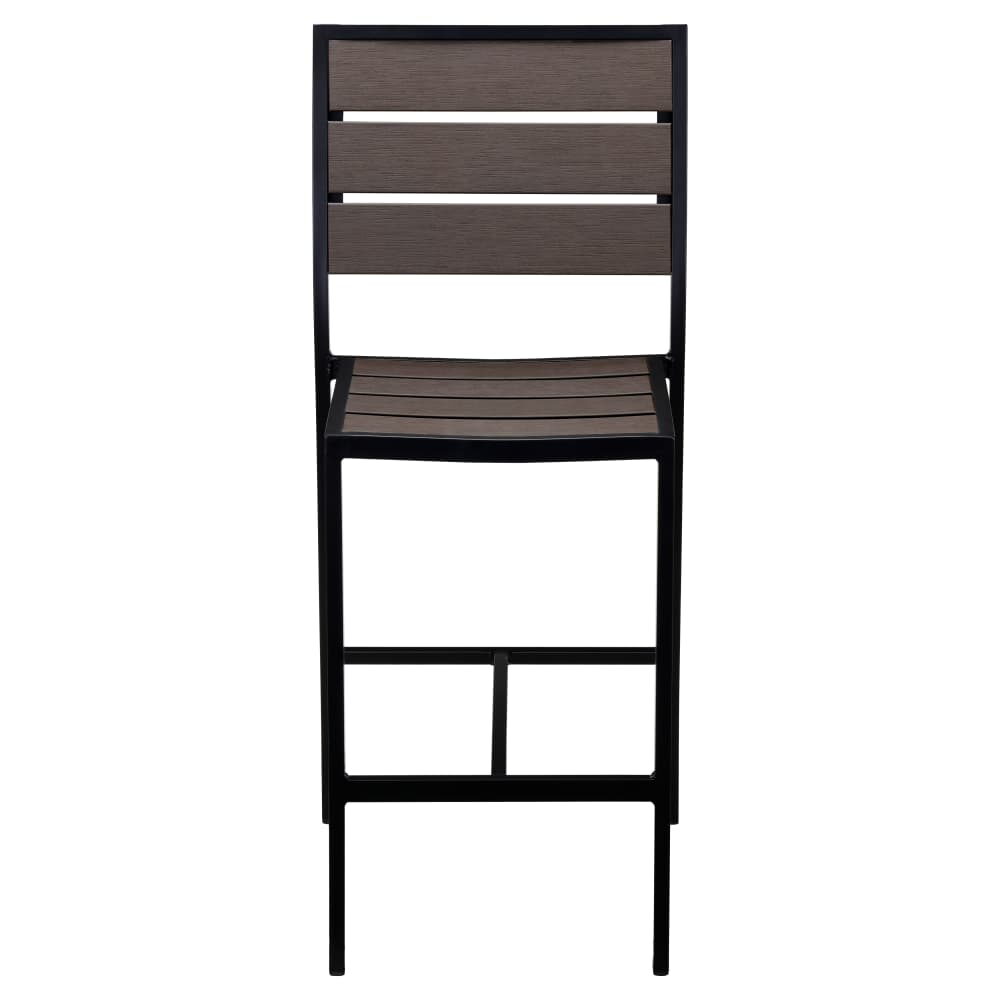
- The aluminum bar stool with a dark walnut synthetic teak seat: 19 3/4 inches wide, 28 1/4-inch seat.
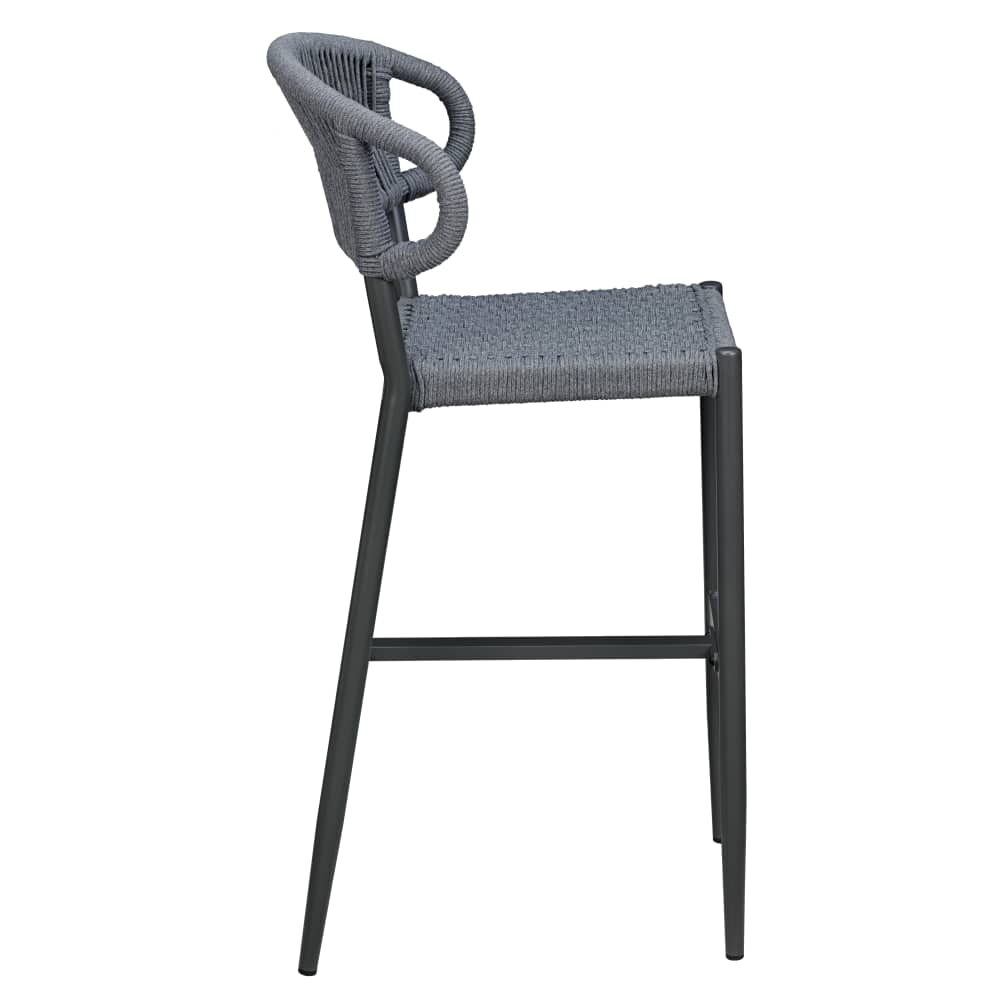
- The rope-seat aluminum bar stool: 24 1/4 inches wide, 30-inch seat.
- The black steel outdoor bar stool: 19 inches wide, 29-inch seat.
Worked example: an 18-foot rail on a rooftop is 216 inches. At 24-inch centers that is nine stools. At 30-inch centers it is seven, with 6 inches left at the end.
Now check the width. The 19 3/4-inch stool at 24-inch centers leaves 4 1/4 inches between frames. Tight, but it fits. The rope stool at 24 1/4 inches wide cannot sit on 24-inch centers at all: the frames would touch before anyone sits down. Put it on 30-inch centers and you get seven stools with 5 3/4 inches between them.
Watch the ends of the run as well. A stool pushed hard against a wall, a planter or the corner post loses the guest's elbow room on that side, and the end seats are the ones that sit empty on a busy Friday while people wait for the middle.
Rule of thumb: read the width on the product page, add the gap you want, and that is your center spacing. Count stools only after that.
Wind, rain and the midnight breakdown
A rail on the roof faces the wind first. Weight matters twice. The black steel stool weighs 20 pounds, which sits heavier in a gust and is also 20 pounds to lift at close. The aluminum stool with the synthetic teak seat weighs 12 pounds and is listed as stackable, which makes the breakdown quicker when every seat goes inside.
Both are listed for patio use, and both still need the routine. Rinse off the street grit, let the seats drain and dry, and when the last warm weekend is over, cover them or move them indoors. Neglect is excluded from the warranty, which covers patio stools for 6 months against defects present at delivery.
Should the stools stay out overnight? On a covered terrace, maybe, chained along the rail. On an open roof, bring them in or stack and cover them. Wind does not care how good the seat looked at golden hour.
For the stool styles themselves, our notes on outdoor bar stools with backs cover slat, solid and perforated backs. The wider picture of materials and heights is in the outdoor bar stools guide.
Tape first, then the cart
Measure three spots along the ledge, not one. Decks slope for drainage, and a long rail is rarely level from end to end. Use the lowest reading when you pick the seat height.
Open an outdoor plan for that rail alone, save the stools you shortlisted, and type the ledge height, the run in inches and your chosen center spacing into the notes. Download the project sheet and tape it inside the door to the roof, so the person setting up tomorrow morning puts nine stools on the line, not eleven.