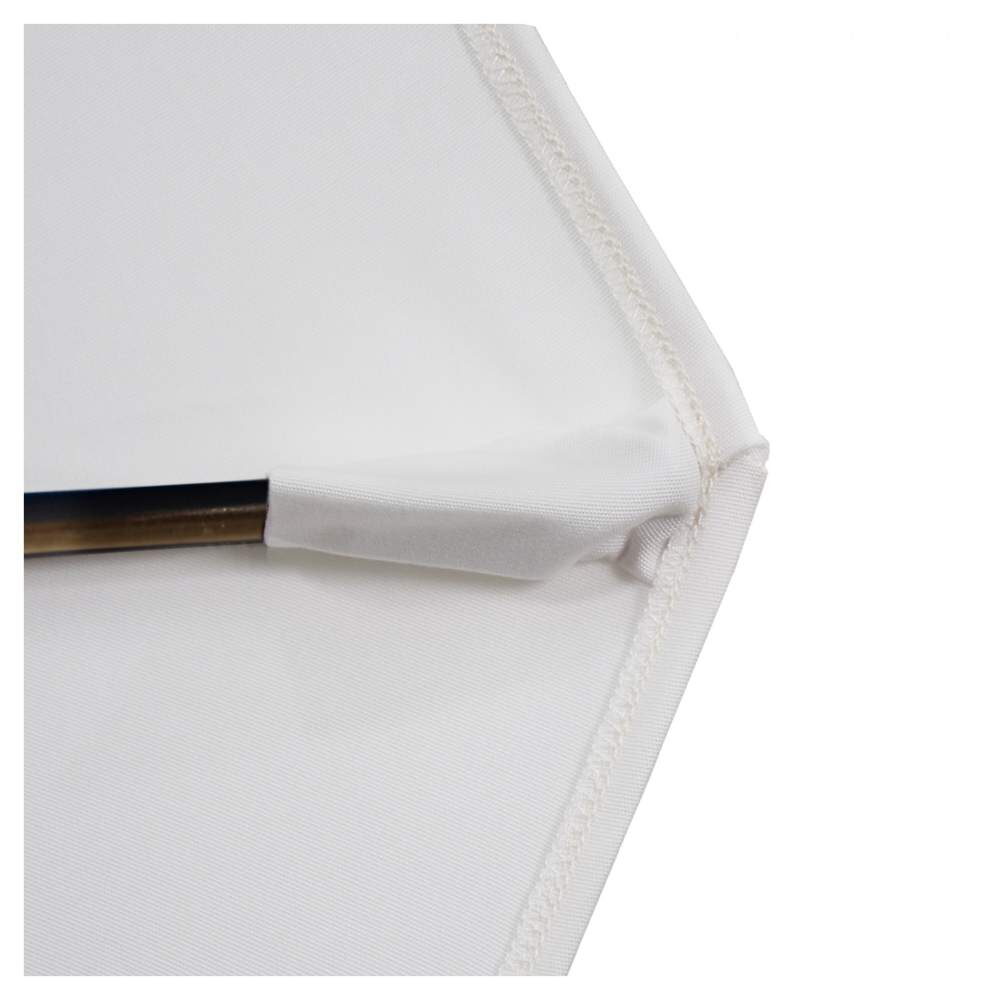
Materials & finishes
Outdoor furniture materials and how to keep them working

Compare the actual references
Aluminum, resin and synthetic teak in the open air.
Aluminum stays light enough to carry in at midnight, resin shrugs off a hose rinse, and synthetic teak reads as wood yet never swells. Read each listing's frame and seat before you pick a color.
Screen images are a starting point for comparing color and texture. Request the available physical samples when you need to judge a finish in your room, and retain the product and option names with the sample request.
Request free samplesFrom the furniture collection
Browse the finish references
Know the frame before it meets the weather.
Explore color and texture references from the current collection. Open a reference to see the products that list it.
Compare two color and texture references
Put two original swatch images side by side. Use the product links to check where each reference is offered. Similar names do not mean identical materials or matching dye lots.
Screen colors and textures are approximate. Confirm each finish and any physical sample arrangements before ordering.
References that use the same image under different finish names are omitted from this comparison. Confirm those finishes with us before choosing a color.

Selected reference
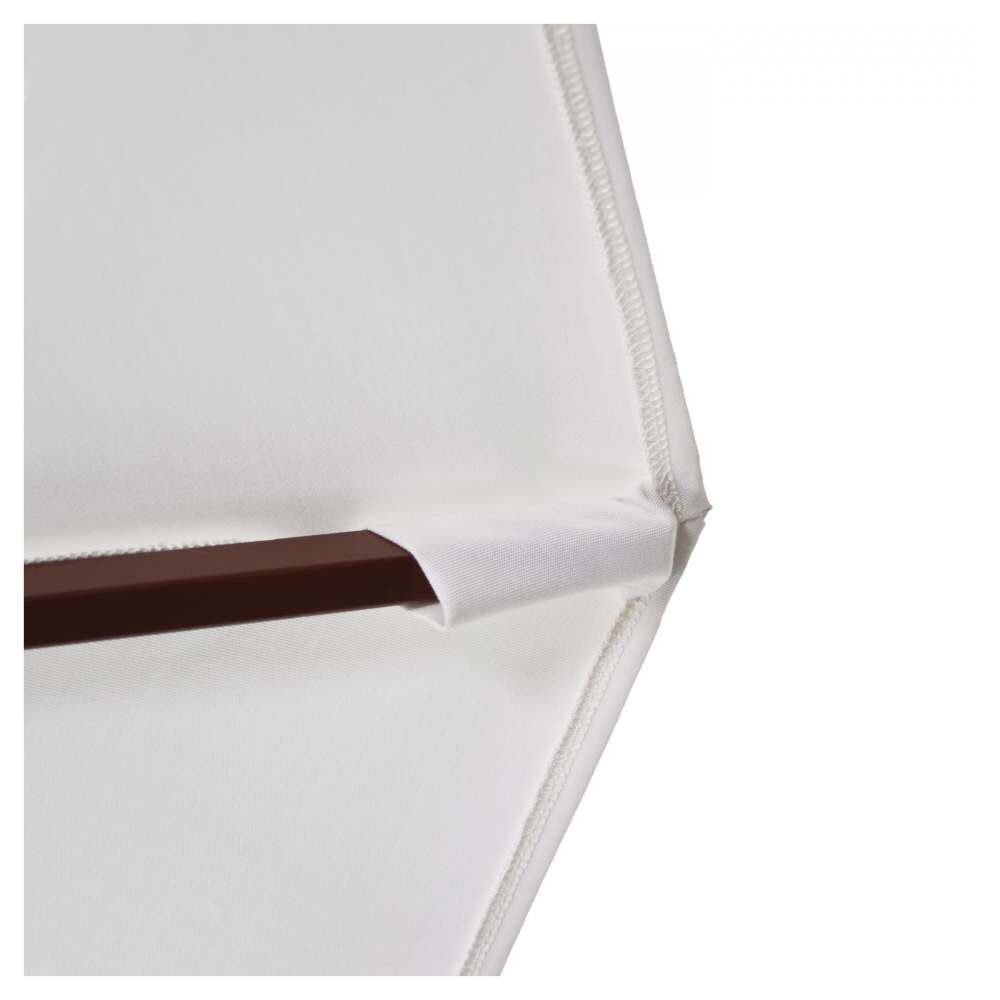
Canvas regatta
Listed on 5 products in this collection. Choose the matching finish on the product page. Other options can affect its availability and price. Product photos show example configurations.
Screen color and texture are references. Confirm the material and any physical sample arrangements before ordering.
Back to fabric →Products with this reference
Open a product to choose its options and quantity.

References are grouped by their option labels. A similar color name does not establish that two products use the same material. Choose and confirm each product configuration separately.
Material care, samples & ordering guide
Sun from noon to six. A shower at four. Grit off the street, a hose every night, and a gust that rattles the rail. Every outdoor material answers that day differently, and each asks something different of the person closing up.
The rule that comes first
Outside is for pieces whose listing says patio, and nothing else. Frames on our outdoor listings are aluminum, resin, synthetic teak or steel with a coating, some with woven seats, some with stone or wood tops. None of that makes a piece carefree. Rinse it, let it drain, and when the season closes, cover it or roll it into a dry room. A few listings also say covered patio only, and those belong under a roof.
Aluminum
Aluminum is the light one. That is why so many rooftop rows use it: stacking and breakdown go fast. The same lightness means wind can push an empty chair across a deck, so chain or stack at night.
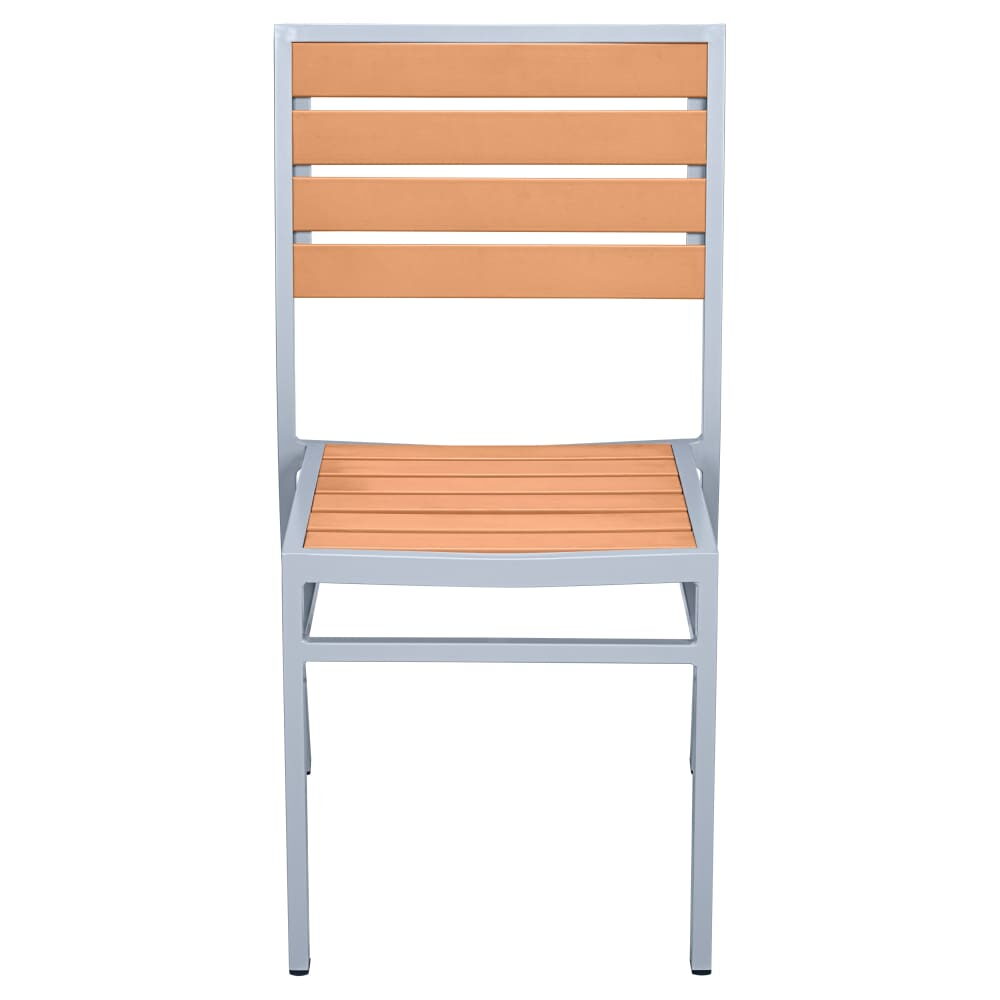
Aluminum does not rust the way steel does, but bare aluminum can grow a dull, chalky film. Where the frame carries a powder coat or another finish, treat the finish gently: mild soap, water, a soft cloth, a clean rinse. No scouring pads. Our catalog also lists aluminum frames with a bamboo look or a wood look, which give a warmer street front without wood's upkeep. Check the feet each month; a worn glide scrapes concrete and wobbles on pavers.
Browse aluminum and steel patio chairs to compare frames.
Steel and powder coat
Steel is heavier, and on a windy corner that weight helps. Powder coat is a dry finish baked onto the metal, and it does a good job until something chips it. Bare steel at a chip will rust if it stays wet. Touch up chips when you see them, before the first orange streak runs down a leg.
Drag a steel chair across concrete and you grind the coat off the feet. Lift instead. At the start of each season, look at the welds, the feet and anywhere two parts meet.
Cast iron, stainless steel and the other bases
A base does the quiet work outside. Cast iron is heavy, which keeps a table steady in a breeze and gives an umbrella something to lean on. Its finish can chip like any coating, and bare iron rusts, so wipe it dry and touch up the spots.
Stainless steel resists corrosion well, but it can show surface spotting near salt air or a pool. A wipe with clean water and a dry cloth usually lifts it. A couple of listings carry chrome bases; chrome outside wants drying after rain, since standing water pits it over time. One table base pairs concrete with steel, about as planted as a base gets.
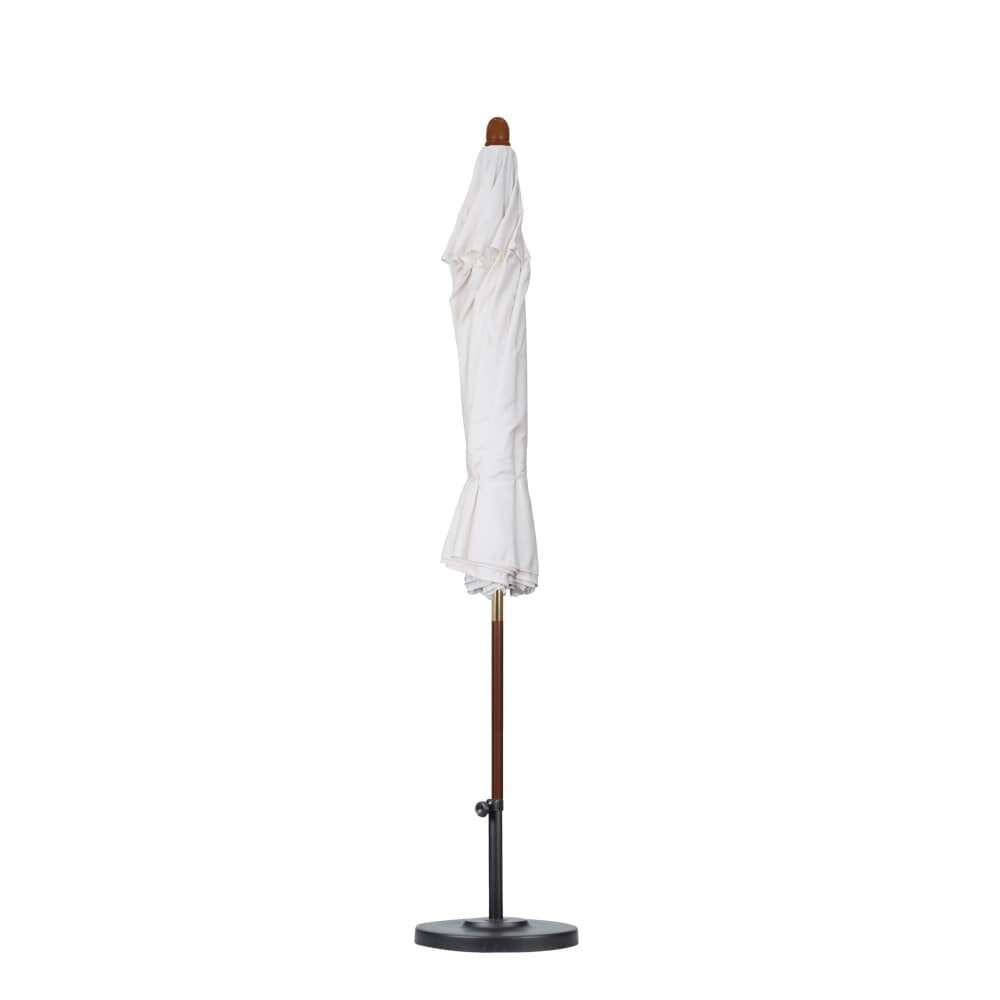
Size the base to the top. Outside, think of two thirds of the top's diameter as the smallest spread a round base should have, never the goal. For an umbrella standing on its own, a stand like the cast iron black umbrella base holds the pole without a table.
Resin
Molded resin chairs and tables are light, easy under a hose, and stackable where the listing says so. Strong sun works on any color over the years, and resin is no exception, so storing it out of season slows the fade. Wash with soap and water. Keep solvents and harsh cleaners away, since they can haze or soften the surface. Browse resin patio chairs for the shapes on offer.
Synthetic teak
Synthetic teak, which some listings call plastic teak, gives you the look of wood slats with none of the oiling. Real teak wants sealing or turns silver; this does not ask for either. Water runs between the slats, so a seat is dry soon after a shower. Clean it the same way as resin. A soft brush along the gaps between slats clears the grit that a hose leaves behind. You will find it on chairs and on tabletops in synthetic teak tables.
Faux rattan, rope and fabric
Woven seats look soft on a street front and trap grit like nothing else. Brush the weave out, hose it from above, and let it drain completely before you stack or cover it. A cover over a wet weave invites mildew. Rope seats, on a couple of listings, get the same routine.
Fabric is rare outside in our catalog, and a fabric outside the listed options counts as custom work. Brush off dirt, spot clean, and dry it before covering. Upholstery swatches are free if you want to see one first.
Tabletops in the open air
The top takes the plates, the sun and the spilled spritz. Here is how the outdoor surfaces in our table tops range behave:
- Resin and synthetic teak: wipe, rinse, done; the easiest tops for a nightly hose-down
- Aluminum and steel: tough, but they heat up in direct sun, so pair them with an umbrella
- Wood: needs its finish renewed on a schedule, and solid wood moves with the weather, which is natural and not a defect
- Laminate: wipe dry, and keep water from sitting along the edges and seams
- Tempered glass: squeegee or a soft cloth, never an abrasive
- Quartz and sintered stone: wipe spills soon, use a mild cleaner, skip acids
A hot afternoon is the real test. Put your hand flat on a sample top at three o'clock in the sun before you choose metal for a south-facing sidewalk.
Umbrellas and heaters
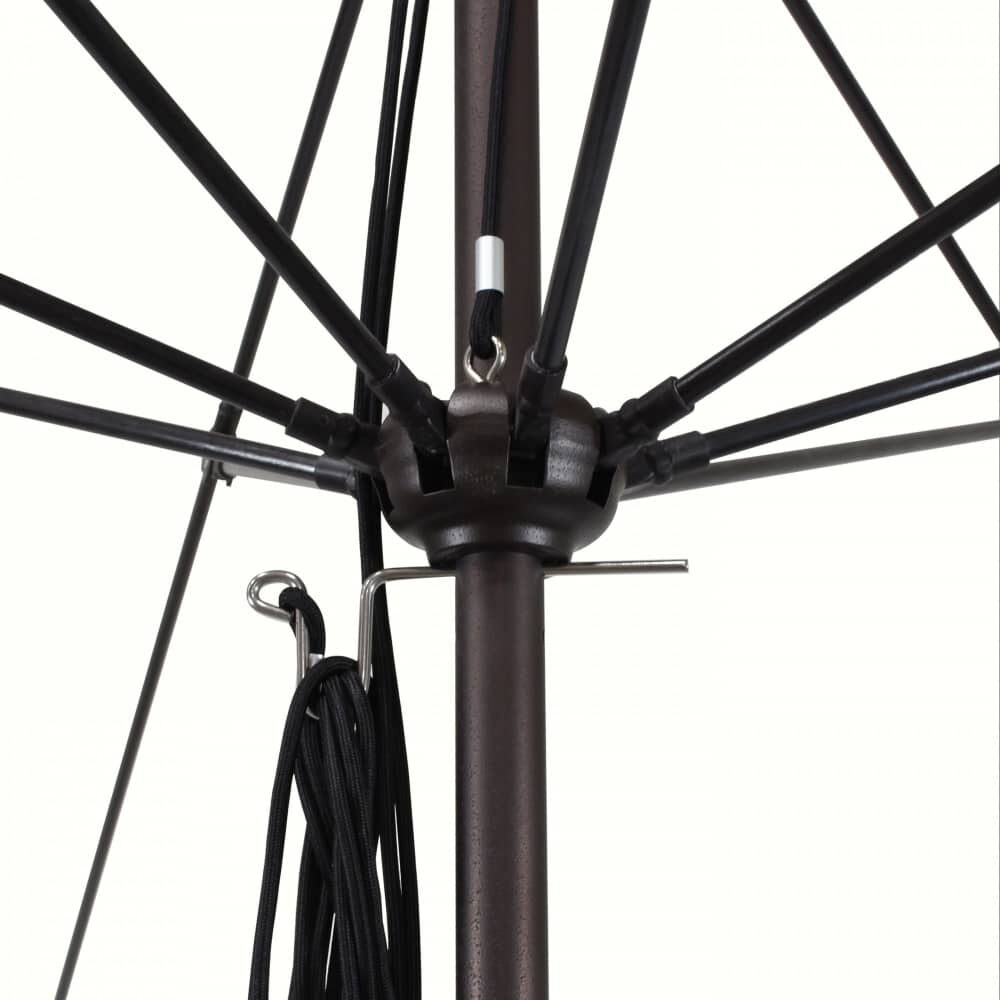
Close the umbrella every night and whenever the wind picks up. An open canopy in a gust is a sail on a pole. Let a wet canopy dry open before you store it, or it comes out of the closet in spring smelling of the closet. Run the pole through a table with an umbrella hole into a base, or use a free-standing base. Patio heaters follow their own listing and instructions, and your local fire rules come first.
A care calendar
Nightly, wipe the tops, close the umbrellas, stack or chain the chairs. After rain, tip the chairs to drain and dry the seats before service. Every week, wash with soap and water and look at the feet. At season's end, clean everything, let it dry fully, then cover it or move it inside, and note any chips to touch up in spring.
That routine also keeps you inside the warranty: outdoor furniture left without care and damage from the wrong cleaning agents are both excluded. For color and finish questions, order a sample from the samples page before you order the patio.