Curb notes
Teak outdoor dining chairs in faux teak: frames, roofs and rain
Rain at four, first seating at six. Slats drain and solid seats hold water, and on a wet evening that is the whole difference between a dry guest and an apology.
In our range, every one of the teak outdoor dining chairs is faux teak: a metal or aluminum frame carrying a seat and back of plastic teak. None of them is solid wood. They read as wood from across the street, they take a hose like plastic, and the record on each one says which frame it has and whether it belongs under a roof. Read those two lines and the rest of the choice gets easy.

Open diagram at full size (new tab) ↗
Read the diagram in text
A center card asks which frame the faux teak chair has. Below it, three cards compare a 12-pound aluminum armchair, a 5-pound aluminum armchair, and a 17-pound metal chair listed for covered patios only, with a note to read the roof line on every record.
- SLAT NOTES
- Which frame is it: Plastic teak seat on aluminum or metal. The record says where it can stand.
- Aluminum, 12 lb: Stacks, holds 500 lb. Open sky is fine.
- Aluminum, 5 lb: Fast to carry in. Moves sooner in a gust.
- Metal, 17 lb: Listed for covered patio only. Keep it under the roof.
- Read the covered patio line on every chair before it goes in the plan.
- Aluminum frames go under open sky. Several metal frames are listed for covered patios only.
Plastic teak, named plainly
Every chair in our plastic teak patio chairs lists its seat material as plastic teak. That is the honest name. It is a synthetic made to look like teak boards, and it does not need oil, sanding or the weekly wood routine a real teak table asks for.
What it needs is ordinary. A rinse after a dusty week, a wipe after a rainy one, and a chance to drip dry before the chairs stack. At the end of the season, clean them and store them inside or under cover.
Aluminum frame or metal frame
This is the line that matters most. Our faux teak chairs come on two kinds of frame, and the record treats them differently.
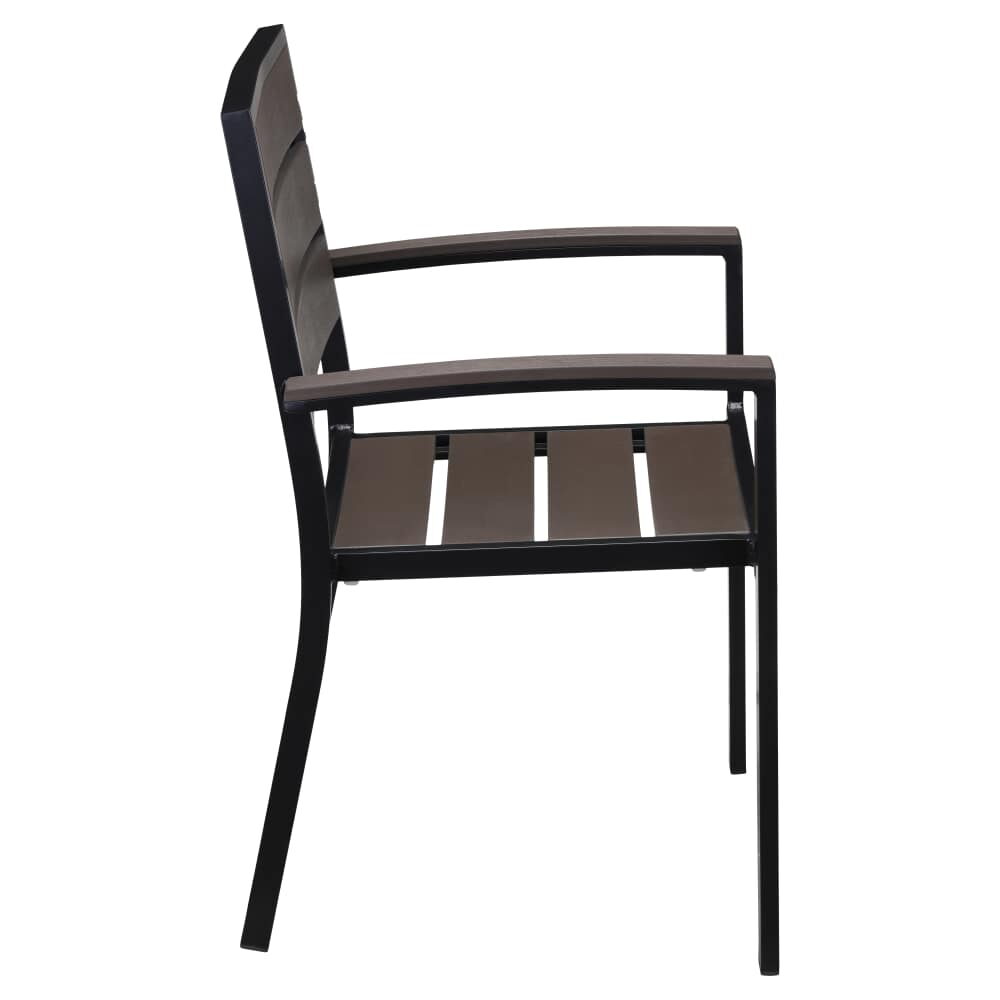
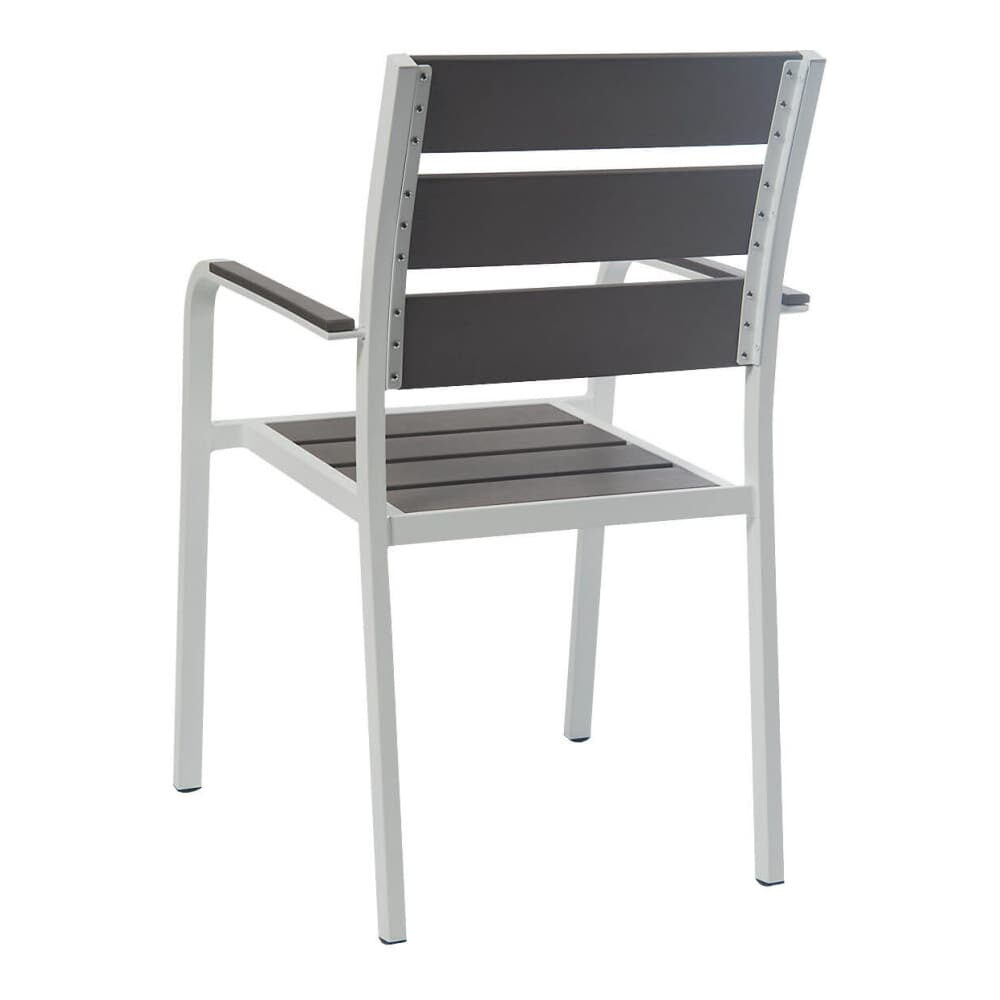
The aluminum ones are listed for patio use with no roof note. A black-frame aluminum armchair with walnut-tone slats weighs 12 pounds, holds 500 pounds, stacks, and puts the seat at 17 3/4 inches. A white-frame aluminum armchair with gray slats weighs 13 pounds, holds 400, stacks, and seats at 18 inches.
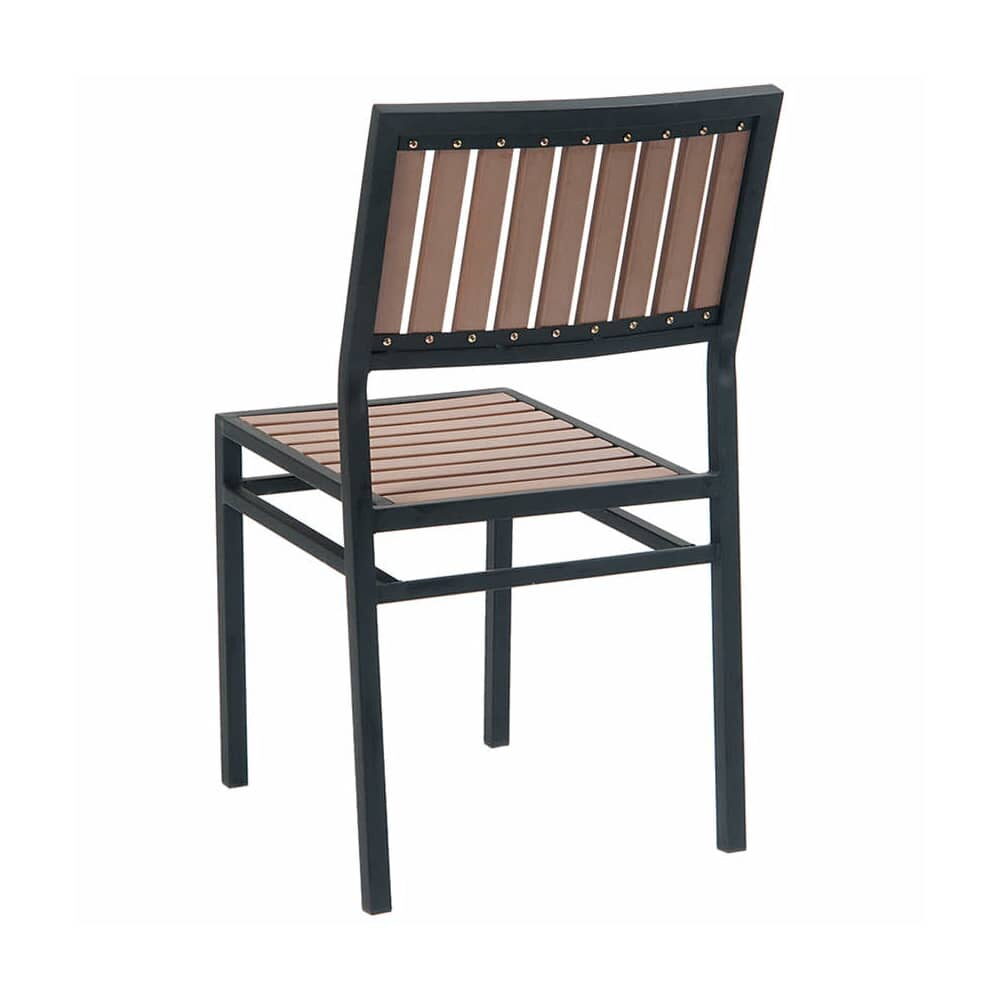
Several of the metal-frame chairs carry a flag: use in covered patio only. A black metal chair with vertical faux teak slats is one, at 17 pounds and a 500-pound capacity. Its armchair partner and three more metal armchairs carry the same note.
So the rule of thumb is short. Open sky, choose aluminum. Under an awning, a pergola or a deep overhang, the covered-only chairs are in play too. The aluminum and steel patio chairs page shows frames side by side.
The mistake on an open roof
Here is the one that costs a season. A buyer sees a handsome black chair with natural slats, orders thirty for a rooftop with no cover, and never reads the covered-patio line. The chairs stand in full sun and rain all summer.
Patio chairs carry six months of cover for defects, and misuse is excluded. A chair listed for covered patios standing in open weather all summer is a hard case to make. Read the roof note on every chair before it goes in the plan, and put the covered-only pieces where the overhang really reaches, not where it reaches at noon in June.
Walk the space at the hour rain usually blows in. Wherever the deck is wet, the roof does not cover it.
Weight, wind and the rooftop
Aluminum makes a light chair, and light cuts both ways up high.
The lightest faux teak chair we list is an aluminum and faux teak patio armchair at 5 pounds. Twenty of them weigh 100 pounds in all, which makes a nightly stack and carry fast. Twenty of the 17-pound metal chairs weigh 340 pounds. That is more than three times the load for the crew, and those are covered-only anyway.
On a roof deck the wind matters as much as the carry. A 5-pound chair moves sooner in a gust than a 12-pound one. If the rooftop catches wind most evenings, choose the heavier aluminum armchairs, stack them at close, and chain or store the stacks rather than leaving singles out on the deck overnight.
Fitting the chair to the table
Faux teak chairs sit at dining height. A seat of 17 3/4 inches under a 30-inch tabletop leaves 12 1/4 inches, just past the top of the usual 10 to 12-inch gap. On a 29-inch table the gap drops to 11 1/4.
Width sets the count. The black aluminum armchair is 23 1/4 inches wide, a hair under the 24 inches of edge a guest needs to eat in comfort. On a 48-inch table side, two of them fit with a little room to spare. Push in three and the arms collide.
A worked example for a terrace: twelve four-tops at 36 by 36 inches, one armchair per side. That is 48 chairs. At 12 pounds each, the set is 576 pounds of aluminum and plastic teak, in stacks the crew can move to storage.
The full range lives under patio chairs, with resin and woven options beside the faux teak ones.
Caring for slats week to week
The good news about slats: water leaves. Even so, a few habits keep them looking like the day they arrived.
Hose the chairs down after a dusty or pollen-heavy week, front and back, then tip them so the seat drains. Wipe spills off the slats before they dry, especially wine and oil. Stack only dry chairs, since a stack holds water between the seats. Check the frame where the slats meet it once a week, and tighten anything that has worked loose.
At season end, give every chair a full wash, let it dry in the sun, and store the stacks inside.
Color is worth a word too. Dark walnut slats hide a dusty week; gray and natural slats show it sooner and look brighter after a rinse. If the rooftop faces the afternoon sun, sit in one before you order thirty. A dark frame in the glare can feel warm to the touch by golden hour, and that is the moment guests choose where to sit.
Order by frame, then by finish
Sort the space into open and covered zones on a sketch, then match each zone to a frame type. Aluminum goes everywhere; the covered-only metal chairs go only where the roof truly is. Each finish takes a separate order line, so black with dark walnut and white with gray are two lines.
Put the zones in one outdoor plan, the chair count per zone in the notes. If you are still weighing materials, compare these with our guide to resin chairs for hose-down plastic, or the guide to synthetic wicker chairs for a woven look on aluminum frames. For an open metal look, the guide to mesh outdoor dining chairs is the next read.